How to stop power struggles with your preschooler starts with one simple truth: you are not battling a tiny dictator, you are bumping into a brain that desperately wants control. That’s why the same child who can negotiate a snack like a seasoned lawyer may also collapse into tears over the “wrong” cup.
If you’re exhausted by every outfit, bedtime, and brush-your-teeth moment turning into a standoff, you’re in the right place — and by the end of this, you’ll have a calm, practical plan that works in real life.
Important: The information in this article is for educational purposes only and does not constitute medical advice. Every child and family is different. Always speak with your pediatrician or a qualified medical professional before making any health-related decisions.
Table of Contents
Why your preschooler fights you over the smallest things
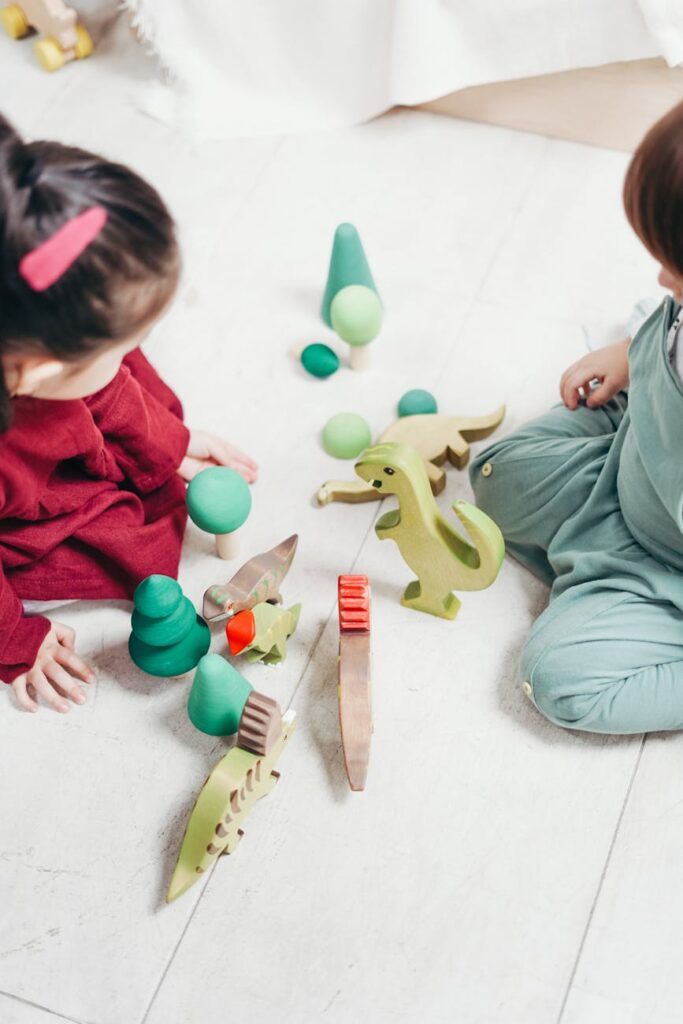
If your child suddenly argues about socks, bath time, or which hand holds the banana, you’re not imagining it. Ages 3 to 5 are a perfect storm of big feelings, growing language, and not-yet-mature impulse control. Your child can want independence and still need you to hold the boundary.
The National Institute of Mental Health explains that self-control skills are still developing in early childhood, which is why logic alone rarely wins these moments. Your preschooler isn’t being “bad” so much as trying to test where they end and you begin. That’s why power struggles with preschooler behavior often show up most when kids are tired, hungry, rushed, or overstimulated.
Here’s the part most parents miss: the struggle is often not about the thing itself. It’s about the feeling of being controlled. Once you see that, your approach changes — and everything gets easier.
That deeper truth matters, because the fix is not “more firmness” or “more explanation.” It’s giving your child limited control in the right places while staying steady in the places that matter most.
How to stop power struggles with your preschooler by changing the game
The fastest way to stop a battle is to stop treating every issue like a debate. Preschoolers do best when parents lead with calm structure, simple choices, and fewer words. In other words: you don’t need to win more arguments — you need to remove the arguments that never needed to happen.
This is the central insight behind how to stop power struggles with your preschooler: control the environment, not the child. The more predictable you are, the less your child has to fight for certainty. The more choices you offer inside your limits, the less they need to grab control in chaotic ways.
- Predictability lowers resistance: A child who knows what happens next has less reason to push back. A visual bedtime routine or a simple morning chart often cuts the “what now?” friction that fuels toddler power struggles.
- Too many words invite negotiation: A long explanation sounds reasonable to adults, but to a preschooler it often sounds like an opening bid. Short, calm instructions work better: “Shoes on, then we go.”
- Choices create dignity: “Do you want the red cup or the blue cup?” gives your child a sense of agency without handing over the whole decision.
- Connection beats correction: Kids are more cooperative when they feel seen. Research from child development experts consistently shows that warm, responsive parenting supports better emotional regulation over time, including work summarized by Harvard Center on the Developing Child.
That’s the mindset shift: you’re not trying to eliminate your child’s need for control. You’re teaching them where control safely lives.
Once that clicks, the practical part becomes much simpler.
The 5-step plan that actually works at home
You do not need a perfect parenting style. You need a repeatable one. Use these steps today, especially during the exact moments when your strong willed preschooler usually pushes back.
- Step 1: Name the transition before it happens. Give a heads-up 5 minutes before the switch: “In five minutes, we’re leaving the park.” Then repeat it once, not five times. Predictable transitions reduce surprise, and surprise is gasoline on power struggles.
- Step 2: Offer two acceptable choices. Keep both options in your world: “Do you want the green pajamas or the striped ones?” If both answers work for you, the conflict never has a place to grow.
- Step 3: State the boundary in one sentence. Try: “I won’t let you hit. I’m moving back.” Short boundaries are clearer than lectures. When you over-explain, you often accidentally invite debate.
- Step 4: Use connection before correction. If your child is melting down, get low, soften your voice, and say what you see: “You wanted to keep playing. That’s hard.” A child who feels understood is more able to hear the limit.
- Step 5: Follow through without drama. If it’s time to leave, leave. If snacks are done, snacks are done. Calm follow-through teaches your child that pushing harder does not change the rule.
These five moves work because they remove the reward of the fight: attention, delay, and uncertainty. And once you start using them, you’ll want to know what the evidence says about why they work so well.
What the research says about power struggles and cooperation
Parenting research keeps landing on the same conclusion: children cooperate best when adults are both warm and firm. One widely cited framework from developmental psychology is the authoritative style — high responsiveness paired with clear limits — which has been linked to better outcomes than harsh, controlling parenting or permissive parenting.
The American Academy of Pediatrics has also emphasized that effective discipline works best when it teaches rather than threatens. Their guidance on positive discipline recommends routines, consistency, and age-appropriate choices instead of power-based showdowns. You can read their approach in the AAP’s guidance on effective discipline.
There’s also a practical reason this matters: the more emotionally flooded a child becomes, the less accessible reasoning is. That’s not opinion — it’s basic brain science. During stress, the part of the brain used for flexible thinking and self-control has a harder time doing its job, which is why “Use your words!” rarely works mid-meltdown.
For families dealing with repeated defiance or intense conflict, experts at Zero to Three recommend routines, predictable limits, and emotional coaching as core tools for early childhood behavior. That aligns closely with what many pediatric behavior specialists see in practice: less yelling, more structure, fewer battles.
What this actually means for you
You do not need to become more forceful. You need to become more predictable. When your preschooler knows what to expect, feels a little control inside your boundaries, and gets a calm response instead of a tug-of-war, the daily fights usually shrink.
That doesn’t mean every hard moment disappears. It means the hard moments stop running your whole house.
The mistakes that turn a small problem into a daily war
Most parents don’t create power struggles on purpose. They get pulled into them because they’re tired, rushed, and trying to get through the morning. But a few common habits quietly make the whole thing worse.
- Mistake #1 — The TED Talk: Long explanations sound respectful, but preschoolers usually hear them as open negotiations. Instead, keep it short: state the limit, then move on.
- Mistake #2 — Asking questions when you mean a boundary: “Can you put your shoes on?” is a question your child can answer with “no.” Say what will happen instead: “Shoes on, then we leave.”
- Mistake #3 — Changing the rule midstream: If you give in after 10 minutes of whining, you teach your child that escalation works. Decide the rule before you speak, then hold it.
- Mistake #4 — Matching their intensity: When adults get louder, kids usually get louder too. A calm voice is not weakness; it’s the thing that keeps the situation from spiraling.
There’s one more trap worth naming: trying to fix every moment in real time. Some battles are really about hunger, sleep, or overstimulation, so the best fix may be a snack, an earlier bedtime, or a quieter schedule. That leads straight into the bigger picture — because this isn’t just a phase in your house, it’s part of a broader shift in parenting.
Why power struggles are becoming a bigger parenting issue
Modern family life gives preschoolers more stimulation and more transitions than kids had a generation ago. Faster schedules, more screen exposure, and less unstructured downtime can all make regulation harder. That’s one reason routines and low-conflict boundaries matter more than ever.
At the same time, more parents are learning that “obedience” is not the goal. The goal is cooperation, emotional safety, and long-term self-control. Pediatric and developmental experts increasingly emphasize that children build these skills through repeated calm experiences, not through fear or constant correction.
That’s the real future-facing takeaway: the families who get ahead of power struggles now are also teaching the exact skills their children will need later — flexibility, frustration tolerance, and trust. If you want the big-picture version, the CDC’s child development resources are a solid place to see how these early skills connect to later growth.
The good news? You don’t need a complete parenting overhaul to see change. You need a few better defaults, repeated often.
Common questions about how to stop power struggles with your preschooler
How do I avoid power struggles with toddler behavior during routines?
Use the same order every day and keep instructions simple. A visual routine chart, a short countdown, and one choice can cut down toddler power struggles fast. If your child is still melting down often, check in with your pediatrician to rule out sleep, sensory, or developmental issues.
What if my strong willed preschooler fights every boundary?
Strong-willed kids usually need more predictability, not more lecturing. Hold the limit, reduce the number of battles, and give control in safe areas like clothing, snack order, or story choice. If the conflict feels extreme or constant, ask your doctor or child professional for guidance tailored to your child.
Is it okay to let my child “win” some battles?
Yes — if the issue truly doesn’t matter. Letting your child choose the cup, the shirt, or the order of two harmless tasks gives them practice with autonomy. Save your strongest stance for safety, health, and core family rules.
How do I deal with defiant toddler behavior without yelling?
Get closer, speak less, and follow through calmly. Many parents find that a quiet, steady “I won’t let you do that” works better than repeated warnings. If the yelling is becoming your default, that’s a sign you need more support and fewer daily battles, not more shame.
How to stop power struggles with your preschooler without losing your cool
How to stop power struggles with your preschooler is really about changing the role you play in the fight. You are not the other side. You are the steady adult who makes the world feel safe enough for a child to stop reaching for control.
When you use fewer words, offer limited choices, keep routines predictable, and follow through calmly, the battles usually get smaller — and sometimes they disappear faster than you’d expect. Your child does not need perfect parenting. They need a parent who is clear, calm, and consistent enough to lead.
Start with one thing today: pick the next conflict point in your house — shoes, snacks, bedtime, or leaving the playground — and change it to a two-choice, one-sentence script before it happens.
You’ve got this, even on the hard days.