
How to talk to your child’s teacher about concerns is one of those parenting moments that can make your stomach drop before you even hit send. You’re not trying to be “that parent,” but you also know something feels off, and ignoring it won’t help your child. Most of the time, the hardest part isn’t the conversation itself — it’s figuring out how to start it without making things weird.
If you’ve been replaying the same worries in your head, you’re in the right place. By the end of this, you’ll know exactly what to say, when to say it, and how to keep the conversation productive instead of tense.
[Important: This information is for educational purposes only and does not constitute medical advice. Every child and family is different. Always speak with your pediatrician or a qualified medical professional before making any health-related decisions.]
Table of Contents
Why talking to your child’s teacher about concerns feels awkward even when you’re being reasonable
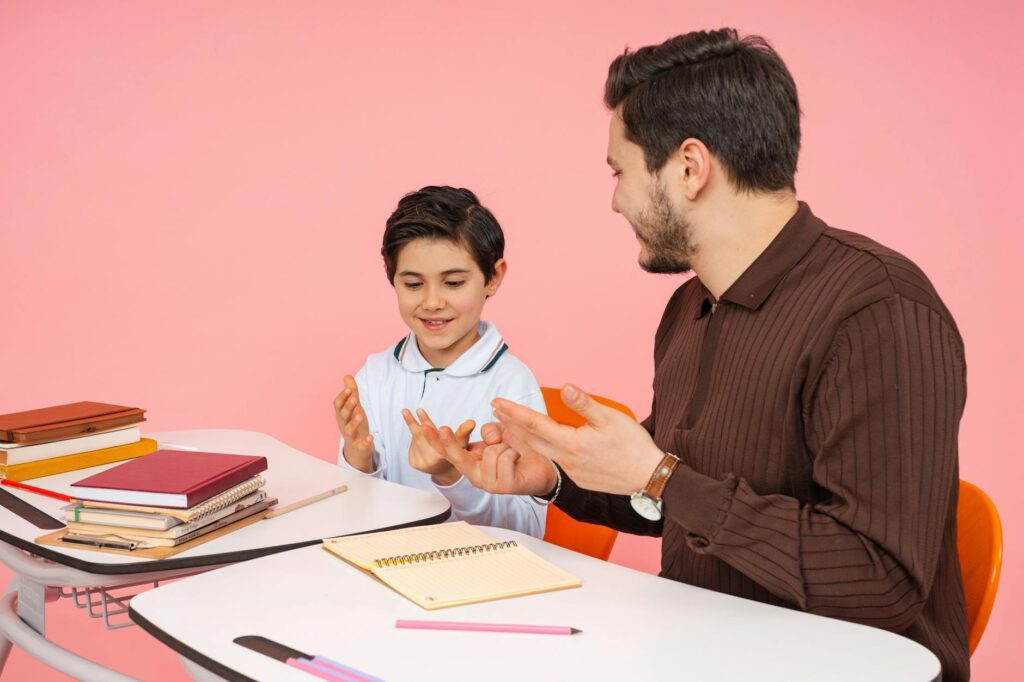
Here’s the part nobody says out loud: most parents aren’t afraid of the teacher. They’re afraid of being misunderstood. You worry your concern will sound too dramatic, too minor, too emotional, or somehow “wrong.” That tension is real, especially when the issue involves academics, behavior, attention, friendships, anxiety, or possible learning differences.
And yet the research is clear that strong family-school communication matters. The Harvard Family Research Project has long documented that when parents and teachers communicate well, students tend to do better academically and socially. The American Academy of Pediatrics also emphasizes that parents are key partners in noticing changes in learning, behavior, sleep, mood, and school functioning, especially when a child seems different from their usual self. For a practical overview of school-family partnership benefits, the U.S. Department of Education’s family-school partnerships guidance is a helpful starting point.
What makes this tricky is that the issue is rarely just “my child is struggling.” It’s usually messier: maybe your child says they’re invisible at school, maybe homework has become a nightly meltdown, maybe the teacher mentioned focus concerns, or maybe your child seems anxious every Sunday night. That’s not overreacting. That’s a parent noticing a pattern.
When you treat the conversation as a partnership instead of a showdown, you make it far more likely that the teacher will open up too. That shift is the whole game — and it starts with one clear truth.
The real secret to parent-teacher communication is this: lead with facts, not fear
The most effective parent-teacher communication isn’t the most emotional. It’s the most specific. Teachers can work with a concrete pattern far better than a broad worry, and they can respond faster when you describe what you’re seeing without assigning blame.
Say this instead of “I think something’s wrong”: “I’ve noticed my child cries before reading homework three nights a week, and the teacher report card comment about rushing through assignments matches what we’re seeing at home.” That gives the teacher something usable. It also signals that you’re observing, not accusing.
This matters because teachers are already juggling a lot. A 2023 RAND survey found teachers continue to report high workload and stress, which means direct, calm communication is not just polite — it’s effective. You’re making it easier for the teacher to help your child by being clear and organized from the start.
There’s also a surprising upside here: the more specific you are, the more likely you are to uncover whether the issue is happening only at school, only at home, or in both places. That distinction changes everything, from interventions to referrals to next steps.
- Specific beats vague: “He’s distracted during math and forgets instructions” is far more useful than “He seems off.”
- Patterns beat one-offs: Teachers need to know whether something happens daily, weekly, or only in certain classes.
- Observation beats interpretation: “She left her seat eight times during reading” is stronger than “She was being disrespectful.”
- Collaboration beats correction: The goal is not to prove the teacher wrong. It’s to solve the problem together.
If you start there, the rest of the conversation becomes much easier — and much more productive.
Now let’s turn that insight into a step-by-step approach you can actually use today.
How to talk to your child’s teacher about concerns without making it tense
Think of this as a simple, repeatable process. You do not need a perfect script. You need a calm plan, a few facts, and one clear ask.
- Step 1: Write down the concern in one sentence. Be specific. “My child is coming home upset after recess” is better than “something is wrong socially.”
- Step 2: Gather 3–5 examples. Note dates, behaviors, teacher comments, homework patterns, or sleep changes. This keeps the conversation grounded in reality.
- Step 3: Choose the right channel. For a small concern, send a short email asking for a phone call or meeting. For urgent emotional or safety issues, request a prompt conversation.
- Step 4: Open with teamwork language. Try: “I want to partner with you because I’m seeing a pattern at home and I’d love your perspective.”
- Step 5: End with a concrete next step. Ask who will do what by when. For example: “Could we check in again in two weeks after we try a seating change and a homework checklist?”
If you want a simple opener, use this: “I’m reaching out because I’ve noticed a change in my child, and I’d appreciate your perspective on whether you’re seeing anything similar at school.” That line is respectful, clear, and hard to misread.
For parent teacher conference tips, the same rule applies: bring notes, stay focused on the top two concerns, and leave with a follow-up plan. If the issue involves reading, attention, anxiety, or speech, it can also help to look at school-based supports and, when appropriate, ask whether the child should be screened further through the school or a clinician. The CDC’s guidance on developmental monitoring and screening is a useful reference if you’re wondering what “next step” might look like.
Once you know how to structure the conversation, the next question becomes: what should you actually say when the teacher replies?
What the data says about parent-school communication — and why it matters for your child
Research consistently shows that family engagement is linked to stronger attendance, better behavior, and improved academic outcomes. The National Center for Biotechnology Information has published reviews showing that parent involvement can support school performance, especially when communication is frequent, positive, and focused on shared goals. The key word there is focused. Random check-ins help less than targeted conversations tied to a real concern.
When it comes to behavior or emotional health, timing matters too. The sooner a concern is discussed, the easier it is to separate a temporary rough patch from a pattern that needs support. The American Psychological Association has also noted that children do better when adults coordinate across home and school instead of reacting in isolation.
One more useful reality check: teachers are often the first professionals to see how a child functions in a structured peer setting for hours at a time. That makes their observations incredibly valuable, especially when home and school behavior look different. The National Association of School Psychologists also encourages parents to bring observations early rather than waiting until a small issue becomes a big one.
What this actually means for you
You do not need to wait for a formal diagnosis, a crisis, or a parent-teacher conference to speak up. If you’re noticing a pattern, that is enough reason to start the conversation. The goal is not to prove something is wrong; it’s to build a clearer picture together so your child gets the right support sooner.
The next step is protecting the conversation from the most common missteps that make good parents sound more confrontational than they intended.
The parent communication mistakes that make everything harder
Most awkward school conversations don’t go sideways because parents don’t care. They go sideways because parents care so much that they rush, assume, or dump too much at once. A few small changes make a big difference.
- Mistake #1 — Emailing in a panic: Late-night messages written while stressed often read harsher than intended. Instead, draft the email, wait ten minutes, and reread it with one question in mind: “Does this sound like a partner?”
- Mistake #2 — Leading with blame: “Why isn’t this being handled?” instantly puts the teacher on defense. Start with curiosity: “Can you help me understand what you’re seeing?”
- Mistake #3 — Bringing every concern at once: Reading, friendships, homework, lunch, and recess all in one meeting can overwhelm everyone. Pick the top issue first, then schedule a follow-up if needed.
- Mistake #4 — Leaving without a plan: A warm talk is nice, but a plan is better. Ask who will do what, when you’ll check back, and what signs will show things are improving.
There’s one more mistake that sneaks up on a lot of parents: assuming silence means nothing is happening. Sometimes teachers are seeing the same concern but waiting for the right moment to talk about it. If you open the door kindly, you may be surprised by how much they already know.
That leads naturally to the bigger picture: why this skill matters even more now than it used to.
Why knowing how to talk to your child’s teacher about concerns matters more than ever
Schools are carrying more than academics right now. Teachers are navigating behavior needs, emotional regulation struggles, learning gaps, chronic absences, and the lingering effects of disrupted routines from the last several years. That means the parent-teacher relationship is no longer a “nice-to-have.” It’s part of how kids get supported.
A growing body of education research points to the same trend: early, cooperative intervention beats waiting for a crisis. The U.S. Department of Education’s family engagement work and the evidence reviewed by organizations like the Collaborative for Academic, Social, and Emotional Learning both point toward the same direction — stronger adult alignment helps children feel safer and perform better.
That’s why this conversation is so important right now. A parent who can calmly, clearly describe a concern gives a child an advantage that isn’t obvious on a report card: adults are paying attention together.
And if you’re worried you’ll forget what to ask, the FAQ below will help you move from “I’m nervous” to “I know exactly what to say.”
Questions parents ask about talking to a teacher about concerns
How do I talk to a teacher about concerns without sounding accusatory?
Use observation language instead of judgment language. Say what you’ve noticed, ask for the teacher’s perspective, and frame the conversation as teamwork. A simple “I’m hoping we can compare notes” goes a long way.
Should I email or ask for a meeting?
Email is great for opening the door and briefly stating the concern. If the issue is complex, emotional, or ongoing, ask for a call or meeting so you can talk it through more fully. If the concern involves health, learning, or behavior patterns, check with your child’s pediatrician or another qualified professional as needed.
What if the teacher disagrees with my concern?
Stay calm and ask for examples. It’s possible the issue looks different in different settings, and that information is useful. If you still feel uneasy, document what you’re seeing and follow up again, or ask whether a school counselor, support team, or pediatrician should be involved.
What should I bring to a parent-teacher conference?
Bring a short list of your top two concerns, a few examples, and one or two questions you want answered. If your child has work samples, behavior notes, or outside evaluations, bring those too. Keep the focus on next steps, not just the problem.
How soon should I follow up after the conversation?
Usually within one to three weeks, depending on the concern. You want enough time to see whether a change is helping, but not so much time that the issue keeps growing. If the concern is urgent or worsening, follow up sooner.
The point isn’t to become a perfect school communicator overnight. It’s to become a steady one.
How to talk to your child’s teacher about concerns and keep the door open
How to talk to your child’s teacher about concerns comes down to one thing: lead with respect, stay specific, and ask for a plan. You do not need perfect wording. You need a clear observation, a calm tone, and a willingness to work together.
That approach protects your child, lowers defensiveness, and makes it easier for the teacher to help. It also gives you something better than reassurance — it gives you information. And information is what turns worry into action.
So here’s your next move: write down one concern, one example, and one question, then send the email or request the meeting today.
I’m rooting for you — and for the kid who’s lucky enough to have you paying close attention.