
Table of Contents
Object permanence baby: When Babies Develop This Essential Cognitive Skill
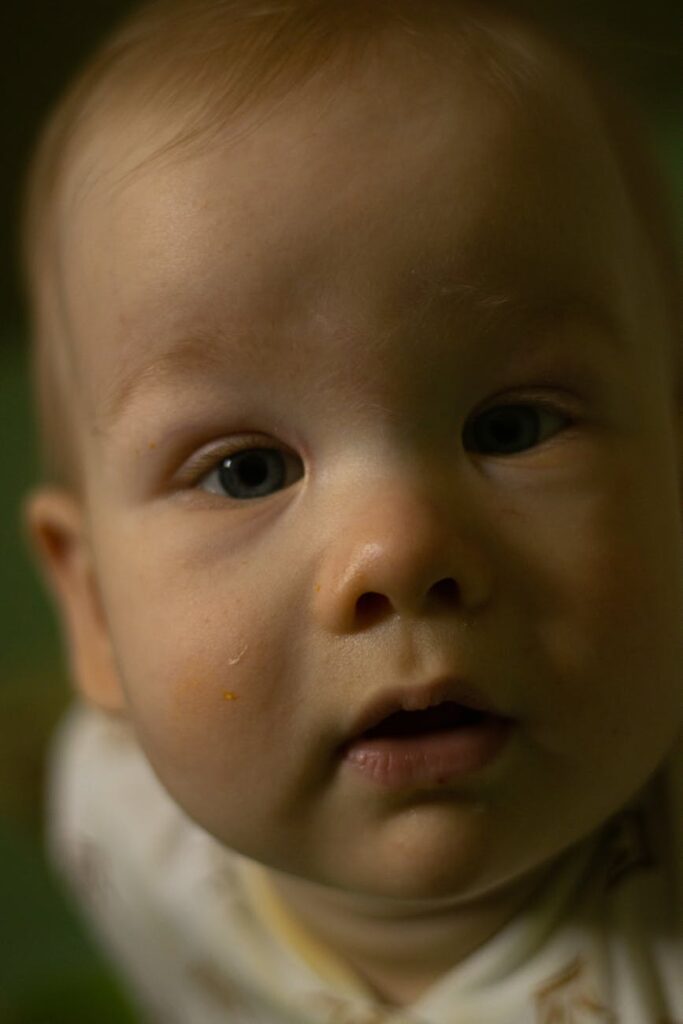
Object permanence baby milestones sound simple until you’re the one waving a toy behind your back and getting that glorious, confused stare. One minute your baby is obsessed with a rattle, and the next they act like it vanished from the universe the second it leaves sight. That tiny moment is actually a big deal in baby cognitive development.
If you’ve been wondering what object permanence is, when do babies develop object permanence, or whether your baby is “behind,” you’re in the right place — and by the end of this, you’ll know exactly what’s normal, what to expect, and what to do next.
Section 1: The Real Problem — Why This Is Harder Than It Looks
The tricky part about object permanence baby development is that it doesn’t arrive all at once, and it doesn’t look the same in every child. A baby may clearly search for a dropped spoon one day, then ignore a hidden toy the next, which sends parents into a spiral of “Is this normal?”
That confusion is understandable because object permanence is tied to several moving parts at once: memory, attention, motor skills, and problem-solving. It’s not just about knowing something exists — it’s about remembering it exists and then acting on that memory. For a baby, that’s a lot.
Jean Piaget, the psychologist who made this concept famous, described infant thinking as built step by step, not all at once.
“The child is a little scientist.” — Jean Piaget, developmental psychologist
That line matters because babies aren’t failing when they don’t find a hidden object. They’re in the middle of learning how the world works. The challenge is seeing the behavior for what it is: a developing brain, not a broken one.
That’s why understanding the real timeline matters more than chasing one “perfect” milestone. Next, let’s get into the core truth that clears up most of the confusion.
Section 2: The Core Truth About Object Permanence Baby Development — The One Thing That Changes Everything
Here’s the core truth: object permanence is not a switch that flips on at one magical age. It develops gradually, and the earliest signs usually appear between 4 and 8 months, with stronger, more reliable understanding often showing up around 8 to 12 months.
In plain English, your baby first learns that something can exist even when it disappears from view. Then they slowly learn to remember it, search for it, and understand that hidden does not mean gone forever. That gap between “sort of gets it” and “really gets it” is where most parents get tripped up.
The reason this matters is simple. When babies start expecting hidden objects to still be there, you’ll see changes in peekaboo reactions, searching behavior, and frustration when a toy is removed. These are not random habits; they’re evidence of baby cognitive development getting more advanced.
- Early signs often show up around 4 to 7 months: babies may look longer at a hidden object or react when a face disappears during peekaboo.
- Between 8 and 12 months: many babies start actively searching for partly hidden toys, blankets, or dropped items.
- By about 18 months: object permanence is usually much stronger, and search behavior becomes more intentional and consistent.
- It’s connected to memory and planning: a baby has to hold the object in mind before they can look for it, which is why this skill builds slowly.
A useful way to think about it: your baby is not just learning that the ball still exists under the blanket; they’re also learning to tolerate not seeing it, remember where it went, and figure out how to get it back. That’s a full cognitive workout.
“Out of sight, not out of mind.” — Common saying
Knowing that changes the game — but only if you can turn it into everyday practice. Here’s exactly how to support object permanence baby development without turning your living room into a Montessori showroom.
Section 3: How to Support Object Permanence Baby Growth — A Step-by-Step Breakdown
- Start with simple peekaboo: Cover your face with your hands, then uncover it after a beat. Keep it playful and repeat the pattern so your baby can predict what happens next.
- Use partly hidden toys: Place a bright toy under a light blanket so part of it shows. That gives your baby a visual clue and makes the search feel doable.
- Move to full hiding with a delay: Hide a toy behind a pillow for 2–3 seconds, then reveal it. As your baby improves, lengthen the pause very slowly.
- Let them “find” dropped objects: When a spoon, pacifier, or ball falls nearby, point to where it went. This supports attention, not just object permanence.
- Repeat the same game for days: Babies learn through repetition, not novelty overload. One or two simple games played often beat a basket of fancy toys used once.
Keep it light. If your baby gets frustrated, make it easier, not more dramatic. The goal is confidence, not performance.
These little games line up beautifully with what child development experts already know, and the research gives us a clearer picture of why they work. Next, let’s look at the data.
Section 4: What the Data Says About Object Permanence Baby Development
Developmental research has long shown that object permanence emerges in stages, not overnight. Classic Piagetian theory placed the major breakthrough during the sensorimotor stage, roughly birth to 2 years, while newer studies show earlier building blocks in infants through looking-time and reaching experiments.
For a practical overview, the American Academy of Pediatrics’ HealthyChildren.org baby development guidance is a trustworthy place to understand broad milestone ranges. And if you want the science behind the theory, Piaget’s work is still a foundational reference for how infants learn to mentally represent unseen objects.
Research also shows that infants’ search behavior improves with age because memory and motor control improve together. In other words, a baby may “know” something is there before they can physically get to it. That’s why a 6-month-old might look surprised when a toy disappears, while a 10-month-old may actually pull the blanket away.
A particularly useful modern perspective comes from studies on infant memory and attention, which show that hidden-object searching is easier when the object’s location is consistent and the hiding is simple. That’s a huge clue for parents: routine helps learning stick.
For a deeper look at early cognitive milestones, the National Library of Medicine’s research repository includes peer-reviewed infant development studies, and the CDC developmental milestones page helps you compare your baby’s behavior with age-based expectations.
A Note on the Research
The data doesn’t mean every baby must hit the same milestone on the same day. It means there’s a normal range, and your baby’s progress should be judged by pattern, not one moment. If your little one is engaging, searching, and getting more curious over time, that’s the signal that matters.
That’s the good news: the science is reassuring. The bad news is that a few common myths still send parents down the wrong rabbit hole, and we need to clear those up next.
Section 5: The Biggest Mistakes People Make With Object Permanence Baby Development (And How to Avoid Them)
Mistake #1 — Expecting one exact age: Parents want a date stamp, but object permanence develops across months, not in a neat birthday package; watch for gradual progress instead of comparing your baby to one online chart.
Mistake #2 — Assuming no searching means no understanding: A baby may understand a hidden object before they have the coordination or patience to look for it, so don’t confuse “not doing it yet” with “not learning it.”
Mistake #3 — Making the games too hard too fast: Full hiding, long delays, and noisy distractions can overwhelm a young infant; start with partial hiding and short pauses so success feels easy and repeatable.
Mistake #4 — Turning it into a test: Babies can feel stress when adults keep asking them to “find it” like it’s a pop quiz, so keep the mood playful and stop before frustration shows up.
These mistakes are easy to make because baby development is messy in real life, not tidy in a chart. Once you know what not to do, it’s much easier to see where this skill is headed next.
Section 6: What the Future of Object Permanence Baby Development Looks Like
Object permanence is more than a cute milestone; it’s a building block for memory, separation understanding, problem-solving, and even early language growth. As children move into toddlerhood, this skill supports pretend play, hiding-and-seeking games, and the ability to understand that people and things still exist when they’re not visible.
The bigger trend in child development research is clear: early cognition is being understood as more connected, more social, and more dynamic than older stage-only models suggested. That’s why developmental scientists now focus on how attention, memory, and interaction work together instead of treating milestones like isolated checkboxes. If you want a broader evidence-based view of early development, the NICHD early childhood development resources are excellent.
Why should you care now? Because the small games you play today help shape the way your baby learns to trust that the world is stable, predictable, and worth exploring. That’s not just adorable. It’s foundational.
The future of object permanence baby learning is not about rushing your child. It’s about giving their brain repeated chances to connect the dots.
Conclusion: The Bottom Line on Object Permanence Baby Development
Object permanence baby development is a gradual process, not a sudden milestone, and that’s exactly why it can feel confusing at first. Most babies begin showing early signs between 4 and 8 months, with stronger searching skills often emerging between 8 and 12 months, but the real story is the steady build underneath the behavior. When you understand what object permanence is, you stop looking for perfection and start noticing progress. That shift alone can make parenting feel a lot calmer.
Your job is simple: make the skill visible through short, playful, repeated games that match your baby’s age and attention span. If you want a concrete next step, grab a soft toy, hide it partly under a blanket, and play peekaboo with the same object three times in the next 10 minutes.