
How much screen time for kids by age is one of those questions that can make even calm parents feel instantly unsure. One child is watching cartoons while you make dinner, another is using a tablet for school, and suddenly you’re wondering if you’re helping, hurting, or just trying to survive the day.
If you’ve been trying to sort out what’s normal, what’s too much, and what actually matters, you’re in the right place. By the end of this guide, you’ll have a clear age-by-age plan you can use right away — without the guilt spiral.
Important: The information in this article is for educational purposes only and does not constitute medical advice. Every child and family is different. Always speak with your pediatrician or a qualified medical professional before making any health-related decisions.
Table of Contents
Why screen time feels so hard to judge in real life
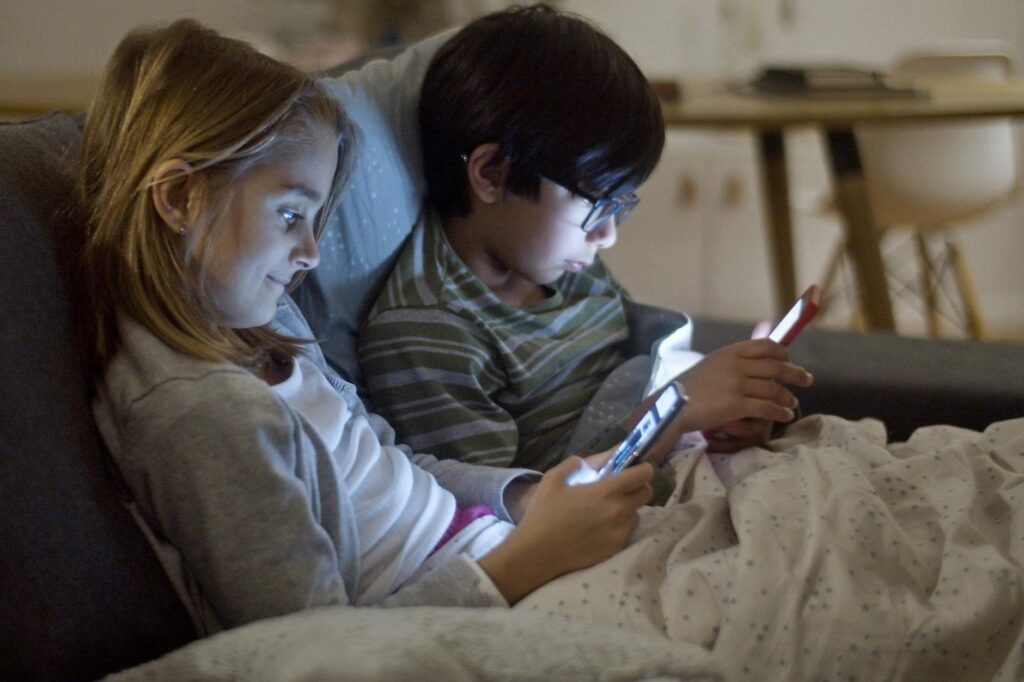
The tricky part is that screen time is no longer just “TV.” It’s FaceTime with grandparents, school assignments, music, YouTube, games, and the five quiet minutes a parent needs to make dinner without the kitchen turning into a disaster zone. That’s why a simple hour count can feel both too strict and not strict enough.
Related resource: Is YouTube Kids Safe for Children? A Parent Review.
What parents usually want is not a lecture. They want to know: How much screen time is okay for my child, and what kind of screen time actually works for our life? The answer depends on age, content, timing, and whether screens are replacing sleep, play, movement, or connection.
For a helpful starting point, the American Academy of Pediatrics’ family media plan is one of the best tools available because it turns vague rules into a workable family agreement.
Related resource: Family Technology Agreement Kids Will Follow.
This matters because the goal is not perfection — it’s protecting development while living in the real world. And that leads us to the single most important truth about screen time.
How much screen time for kids by age isn’t just about the clock
The biggest mistake parents make is focusing only on minutes. What children do on screens matters as much as how long they’re there. A high-quality video call with a grandparent is not the same as endless autoplay videos or a chaotic gaming session right before bed.
The AAP’s guidance for younger children is especially clear: avoid solo screen use under 18 months except for video chatting, choose high-quality programming for ages 18 to 24 months with a caregiver present, and limit ages 2 to 5 to about 1 hour per day of high-quality content with co-viewing when possible. You can read the current guidance through HealthyChildren.org’s media recommendations.
For older kids, the conversation shifts. The AAP does not give a single universal daily limit for school-age children and teens because their needs vary so much. Instead, it recommends creating a balanced media plan that protects sleep, schoolwork, physical activity, and face-to-face relationships.
Here’s the part most parents don’t expect: screen timing can be more disruptive than total screen time. A modest amount of screen use late at night can affect sleep more than a longer amount used earlier in the day. That’s why a 20-minute video before bed may cause more problems than 45 minutes after homework and outside play.
So yes, minutes matter. But content, context, and timing matter just as much — sometimes more. Next, let’s turn that into a real age-by-age plan.
How much screen time for kids by age: a simple age-by-age guide
If you want the shortest honest answer, here it is: the younger the child, the less passive screen time they should have. As children get older, the focus shifts from strict limits to healthy boundaries.
- Under 18 months: Avoid screen media except for video chatting with family or caregivers. Babies learn best from real human interaction, not background videos.
- 18 to 24 months: If you choose to introduce screens, stick to high-quality programming and watch together so you can explain what they’re seeing.
- Age 2 to 5: Aim for about 1 hour per day of high-quality content, ideally with an adult nearby. The content matters a lot here — calm, educational, and age-appropriate beats fast-paced overstimulating videos.
- Ages 6 to 10: Focus less on one fixed number and more on keeping screens from crowding out sleep, active play, homework, and family time. Many families do well with a simple weekday cap and looser weekend rules.
- Ages 11 to 13: Preteens need more independence, but they still need guardrails. This is the age to be very intentional about social media, gaming, and nighttime device access.
- Teens 14 to 18: The goal is self-management, not unlimited access. Teach them to notice how screens affect mood, sleep, school focus, and stress — then adjust together.
A good rule of thumb: if screen use is consistently pushing out sleep, movement, reading, chores, in-person play, or family connection, it’s too much for that child — even if the number looks “reasonable” on paper.
That’s the framework. Now let’s make it practical enough to use today.
How to set healthy screen time rules today without a daily battle
You do not need a perfect system. You need a clear one your family can actually follow on a tired Tuesday.
- Pick your non-negotiables first: Decide what screens cannot interfere with — usually sleep, meals, homework, and one daily chunk of active play. Write those rules down before discussing minutes.
- Create device-free zones: Keep screens out of bedrooms and dinner time if you can. The CDC’s sleep guidance supports routines that protect rest, and bedroom devices make that much harder.
- Use content categories, not just time limits: Put educational shows, family video calls, and entertainment in different buckets. A 30-minute learning app should not be treated the same as 30 minutes of endless short-form video.
- Match the rule to the age: Younger kids need tighter boundaries and more adult involvement. Older kids need more ownership, but still need structure around bedtime and social media.
- Review the plan weekly: Ask one simple question: “Did screens help our week, or did they start causing problems?” If they caused fewer headaches than before, keep going. If not, tighten one boundary at a time.
If you want a very workable family tool, the AAP’s Family Media Plan lets you build rules around your child’s age and your household values. The right system is the one you’ll actually use tomorrow.
Once those basics are in place, the evidence behind the guidelines makes a lot more sense.
What the research actually says about too much screen time children
The research is not saying every screen minute is harmful. It’s saying that heavy, poorly timed, and low-quality screen use is linked with problems like shorter sleep, more behavioral issues, and less physical activity.
A large 2022 study in The Lancet Child & Adolescent Health found that higher screen use in young children was associated with lower developmental and psychosocial well-being, especially when screen time became a routine substitute for other activities. You can explore the journal’s coverage through The Lancet Child & Adolescent Health.
The World Health Organization also recommends minimal sedentary screen time for children under 2 and less screen time overall for children 2 to 4, while emphasizing active play and sleep as priorities. Their guidance is summarized on the WHO physical activity page.
What’s especially interesting is that some studies find the type of screen time matters more than the total amount. For example, video chatting can support relationships, while fast-paced, autoplay-heavy content can make it harder for younger kids to self-regulate. That’s why a blanket “screens are bad” message misses the point.
What this actually means for you: you do not need to panic about every episode or app. But if screens are starting to chip away at sleep, behavior, attention, or family routines, the research says that’s a real signal to step in sooner rather than later.
And when parents do step in, they often make the same avoidable mistakes.
The screen time mistakes that trap even good parents
Most screen-time problems are not caused by laziness. They’re caused by tired, loving parents trying to get through the day with the tools they have. Still, a few specific mistakes show up again and again.
- Mistake #1 — Using screens as the default pacifier: It works fast, which is exactly why it becomes the first tool people reach for. The problem is that kids start expecting screens every time they’re bored, upset, or waiting. Try building a tiny backup list instead: books, crayons, puzzles, music, or a “boredom basket.”
- Mistake #2 — Letting bedtime screens sneak in: This one is sneaky because it feels harmless. But phones, tablets, and TVs near bedtime can make sleep harder by delaying the wind-down routine and keeping the brain activated. Move devices out of bedrooms and set a predictable cutoff.
- Mistake #3 — Treating all screen time the same: A video call with Dad, a school assignment, and random short-form videos are not equal. Separate “connection,” “learning,” and “entertainment” so your rules make sense instead of feeling arbitrary.
- Mistake #4 — Using vague rules like “less screen time”: Kids cannot follow what they cannot picture. Say something concrete: “We do screens after homework and outside time, and they turn off 30 minutes before bed.” Specific rules reduce daily arguing.
These mistakes are common because screens are designed to pull us in. The fix is not stricter guilt; it’s smarter structure. That matters even more as kids grow up.
Why screen time for kids is becoming a bigger family health topic
This isn’t a passing parenting fad. It’s a bigger cultural shift. Children are growing up with screens woven into school, friendship, entertainment, and even calming strategies, which means families now have to teach digital habits the same way they teach sleep, manners, and safety.
One useful lens here is that the conversation is moving from “How many hours?” to “What kind of digital life are we building?” That’s where researchers, pediatric groups, and schools are heading, because the biggest long-term issue is not one video or one game — it’s whether kids learn to use screens intentionally instead of automatically.
As pediatricians see more concerns around sleep, attention, and online safety, the trend is clear: families that build media boundaries early usually have an easier time later. That’s why now is the right time to set the tone, even if your child is already used to frequent screen use.
Related resource: setting up parental controls.
And if you’re wondering whether you’ve missed the window, you haven’t. Small changes still help — a lot.
FAQ: how much screen time for kids by age
Is all screen time bad for kids?
No. Video chatting with family, educational content, and some supervised learning apps can be helpful. The concern is when screens replace sleep, movement, play, or connection, so it’s smart to look at the whole day — and if you’re unsure, check in with your pediatrician.
Related resource: Best Educational Apps for Toddlers That Actually Teach.
What is the AAP screen time guideline for toddlers?
For toddlers 18 to 24 months, the AAP recommends high-quality programming only, ideally watched with a caregiver. For ages 2 to 5, the guideline is about 1 hour per day of high-quality content with adult involvement when possible. You can review the full guidance on HealthyChildren.org.
How do I know if my child has too much screen time?
A big clue is when screens start crowding out sleep, schoolwork, play, or family time. Behavioral changes like more meltdowns when screens stop, trouble falling asleep, or constant device-seeking can also be signs. If you’re seeing those patterns, it’s worth discussing them with your child’s doctor.
Should kids have screens in their bedroom?
Most families do better without them, especially at night. Bedrooms with devices make it easier for sleep to slip and harder for kids to self-regulate. A simple charging station outside the bedroom can make a surprisingly big difference.
Do older kids and teens still need screen limits?
Yes, just in a different form. Teens need boundaries around sleep, school, safety, and social media, plus gradual independence so they can learn to manage their own habits. It’s a good idea to keep revisiting the rules together as they get older.
The real answer to how much screen time for kids by age
The real answer to how much screen time for kids by age is not just a number — it’s a plan that protects sleep, play, learning, and connection. For babies and toddlers, that means very limited and carefully chosen screen use. For school-age kids and teens, it means boundaries that fit your family instead of pretending life can run without screens at all.
If you remember nothing else, remember this: the best screen rule is the one that helps your child thrive in real life. Not the strictest rule. Not the most lenient one. The one that supports healthy routines, calm behavior, and better sleep.
Take one step right now: choose a screen cutoff time for tonight and move the charging devices out of your child’s bedroom before bed.
You’re not behind. You’re building this one solid choice at a time.