
Why Does My Toddler Wake Up Crying at Night? Usually, it’s not because you’re doing anything wrong — and it’s almost never as mysterious as it feels at 2:13 a.m. The pattern is often a mix of sleep cycles, separation anxiety, overtiredness, illness, or, in some cases, night terrors.
If you’ve been pacing the hallway with a half-sleeping child on your shoulder, you’re in the right place. By the end of this, you’ll know what’s most likely happening, what to do tonight, and when it’s time to call your pediatrician.
Important: The information in this article is for educational purposes only and does not constitute medical advice. Every child and family is different. Always speak with your pediatrician or a qualified medical professional before making any health-related decisions.
Table of Contents
Why your toddler wakes up crying at night feels so intense
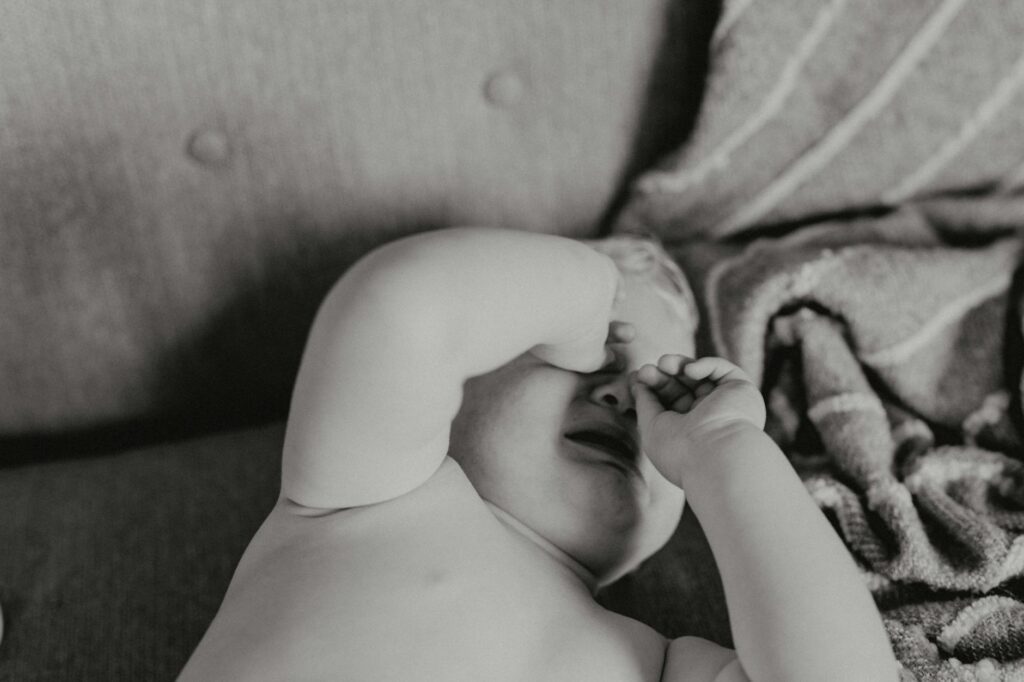
When a toddler wakes up crying at night, it can look dramatic because toddlers don’t wake up gently. They often go from fully asleep to fully upset in seconds. That doesn’t automatically mean something is seriously wrong — it usually means their brain and body are still learning how to move between sleep stages.
Here’s the real-world version: your child may have had a normal night waking, but instead of rolling over and going back to sleep, they’re suddenly panicked, confused, hungry, uncomfortable, or looking for you. Toddlers are also at the age when separation anxiety, big feelings, and language gaps collide. They can feel something deeply and not have the words for it.
According to the American Academy of Pediatrics sleep guidance, sleep problems in young children are common and often tied to routines, environment, and developmental changes. That’s why the same child can sleep beautifully for weeks, then suddenly start crying at night after travel, illness, or a schedule shift.
Transition: The key is not guessing wildly — it’s learning which kind of waking you’re dealing with, because the fix depends on the cause.
The real reason toddler night wakings happen is usually a mismatch between sleep and development
The most important thing to understand is this: most toddler night waking causes are not “bad habits” in the moral sense. They’re a mismatch between a toddler’s developing nervous system and the demands of sleep.
That means the problem often isn’t just the crying. It’s what’s underneath it: a child who’s overtired, overstimulated, uncomfortable, scared, sick, or waking between sleep cycles and realizing they need help getting back down. The National Sleep Foundation notes that young children can have multiple partial arousals through the night, and many don’t fully self-settle yet.
- Overtiredness: A toddler who missed a nap or had a late bedtime may sleep more fitfully and wake crying harder.
- Separation anxiety: This often peaks in toddlerhood, so a child may wake and panic when they don’t immediately sense a parent nearby.
- Discomfort or illness: Teething, ear infections, fever, congestion, reflux, eczema, or a wet diaper can all trigger crying.
- Night terrors: These are different from nightmares and usually happen during deep sleep, with the child appearing distressed but not fully awake.
The surprising part? The most disruptive nights are often caused by a simple combo: a child who is tired enough to crash, but too dysregulated to stay asleep smoothly. That’s why a “good bedtime” alone doesn’t always solve it.
Transition: Once you understand the pattern, you can stop reacting to every cry the same way and start matching your response to the actual problem.
What to do tonight when your toddler cries in sleep
You do not need a perfect system. You need a calm, repeatable one. Start here the next time your toddler is crying at night.
- Pause for 30–60 seconds: If the crying started suddenly, wait a moment before rushing in. Some children resettle if you don’t interrupt a brief sleep transition.
- Check for full wakefulness: Speak softly. If your toddler responds clearly, they’re awake; if they seem glassy-eyed, confused, or hard to engage, it may be a night terror or partial arousal.
- Do a quick comfort-and-check: Look for obvious causes: wet diaper, fever, congestion, signs of pain, or an unusual sleep environment like a room that’s too hot or cold.
- Keep your response boring and calm: Use low light, minimal talking, and a predictable phrase like “You’re safe. It’s sleep time.” Avoid turning it into play or a long negotiation.
- Track the pattern for 3–5 nights: Note the time, what they ate, bedtime, nap length, and whether they were truly awake. Patterns show up fast when you write them down.
If your child is sick, in pain, or you’re seeing repeated distress, check in with your pediatrician. A warm, steady response is great — but medical issues need medical eyes.
Transition: If you want a clearer answer, the next step is figuring out whether this is ordinary waking, a nightmare, or something like a night terror.
Why does my toddler cry in sleep? Not every night cry means the same thing
This is where parents get tripped up. A toddler crying in sleep is not automatically the same as a toddler waking up crying. The difference matters because the response is different.
Nightmares usually happen in the later part of the night, when dream sleep is more active. Your toddler typically wakes up, is alert enough to recognize you, and may want comfort, light, or water. The NHS guidance on nightmares explains that children often remember the dream or the fear afterward.
Night terrors toddler episodes usually happen earlier in the night, during deep non-REM sleep. A child may scream, thrash, sweat, stare, or seem awake but actually isn’t fully conscious. They usually don’t remember it in the morning. The Cleveland Clinic and sleep medicine experts consistently note that trying to fully wake a child during a night terror often makes it worse.
Simple sleep transitions can also include fussing, brief crying, or calling out without a major issue. These tend to be short and self-limited, especially if your toddler is otherwise healthy and the room/schedule is stable.
Here’s the shortcut: if your child knows who you are and can talk to you, it’s probably not a night terror. If they look awake but aren’t really there, think partial arousal.
Transition: Once you know the type of waking, the next question is what’s causing it in the first place.
Toddler night waking causes that actually show up in real life
Most families don’t have one single cause. They have a stack of small things. That’s why solving toddler night waking causes usually means fixing the whole sleep setup, not chasing one magic trick.
These are the big ones I see again and again:
- Schedule drift: A bedtime that’s too late, naps that run long, or inconsistent wake times can make nights rough.
- Separation anxiety: This can intensify at bedtime and after night wakings, especially after a parent travel schedule change or a move.
- Overtiredness: A child who “looks tired enough” is not always sleeping well enough. Overtired toddlers can wake more, not less.
- Sleep associations: If your toddler needs a very specific setup to fall asleep — rocking, feeding, lying next to them — they may look for that same condition after each partial waking.
- Physical discomfort: Ear infections, constipation, eczema itch, teething, reflux, and congestion can all turn sleep into a broken mess.
The American Academy of Sleep Medicine and pediatric sleep researchers have long emphasized that consistent routines and age-appropriate sleep habits help reduce fragmentation. In plain English: toddlers do better when bedtime looks boringly similar every night.
What this actually means for you: If the crying started after a schedule change, illness, travel, or a new sleep setup, don’t assume your child “just decided” to be difficult. Their body may be reacting to a disruption that seems tiny to you but huge to them.
Transition: And because some sleep problems need a different kind of response, it helps to know which mistakes make things worse.
The mistakes that make night wakings last longer
These are the habits that accidentally keep the cycle going. Parents make them because they’re exhausted, not because they’re doing anything wrong.
- Mistake #1 — Treating every cry like an emergency: Not every wake needs a full intervention. If you rush in every time, your toddler may wake more fully and need more help settling.
- Mistake #2 — Changing the plan every night: One night you rock, the next night you negotiate, the next night you co-sleep. Toddlers love patterns, even when those patterns are imperfect.
- Mistake #3 — Pushing bedtime later to “make them more tired”: This usually backfires. Over-tiredness often creates more night wakings, not fewer.
- Mistake #4 — Ignoring pain or illness clues: If crying is new, intense, or paired with fever, vomiting, ear pulling, breathing changes, or a weird daytime mood shift, don’t assume it’s behavioral.
A small but powerful reset is to choose one bedtime response and stick with it for a week. You’re teaching your toddler’s nervous system what to expect, and that predictability matters more than being “perfect.”
Transition: The bigger picture is that toddler sleep problems are becoming more visible, not less, so the sooner you build a plan, the easier this gets.
Why toddler sleep problems are more common than you think
Sleep research keeps pointing to the same truth: young children’s sleep is sensitive, and modern family life is not especially sleep-friendly. Late evenings, screen exposure, irregular schedules, daycare transitions, and stress all put pressure on a toddler’s already immature sleep system.
One especially useful point from pediatric sleep experts is that sleep issues often cluster. A child who is overtired may resist bedtime, then wake crying, then nap poorly the next day, which sets up the next rough night. It becomes a loop.
That’s why early attention matters. The goal isn’t to create a “sleep trained robot.” It’s to protect your child’s sleep before the pattern hardens into something everyone dreads.
Why this should matter now: The earlier you identify the trigger — schedule, comfort, illness, or parasomnia — the easier it is to fix without turning bedtime into a nightly battle.
Transition: If you’re still unsure what kind of waking you’re seeing, these common questions can help you narrow it down fast.
What parents ask most about toddler waking up crying at night
These are the questions that come up again and again — because when it’s happening in your house, you want straight answers, not theory.
Is it normal for a toddler to wake up crying at night?
Yes, it can be normal, especially during developmental leaps, illness, travel, or after sleep schedule changes. If it happens often or seems painful, check in with your pediatrician to rule out medical causes.
How do I tell a nightmare from a night terror?
Nightmares usually wake your child fully and they can comfort-seek or talk about it. Night terrors often happen earlier in the night, with your child appearing upset but not fully awake and not remembering it later.
Should I wake my child during a night terror?
Usually no. Most sleep specialists recommend keeping the environment safe, speaking softly if needed, and letting the episode pass. If the episodes are frequent or severe, bring it up with your child’s doctor.
When should I worry about toddler night waking?
Worry more if there’s fever, pain, breathing trouble, vomiting, a rash, repeated snoring or gasping, or a major change in daytime behavior. Your pediatrician can help sort out whether it’s sleep, illness, or something else.
Can a bedtime routine really help?
Absolutely. A predictable routine lowers arousal before sleep and helps toddlers know what happens next. The routine doesn’t need to be fancy — it just needs to be steady.
Transition: The real win is not eliminating every cry forever; it’s understanding the pattern well enough to respond calmly and confidently.
Why Does My Toddler Wake Up Crying at Night? The clearest answer is this
Why Does My Toddler Wake Up Crying at Night? Because toddler sleep is fragile, and little bodies are still learning how to move through the night without help. Sometimes it’s a habit, sometimes it’s a developmental phase, and sometimes it’s a clue that your child is uncomfortable or unwell.
You don’t need to solve it all tonight. You do need to watch for patterns, keep bedtime steady, and notice whether your child seems awake, confused, in pain, or just briefly upset between sleep cycles. That one distinction can save you a lot of fear at 2 a.m.
If your toddler’s crying is new, frequent, intense, or tied to symptoms like fever, snoring, breathing changes, or pain, call your pediatrician. And if it’s the more ordinary kind of night waking, start with one small change tonight: write down the wake time, what happened before bed, and how long it took to settle. That simple log can reveal the pattern faster than your exhausted brain ever could.
You’re not failing. You’re decoding a tiny person with a very loud sleep system — and that does get easier.