
How to stop toddler hitting and biting calmly starts with one hard truth: your child is not trying to be “bad.” They’re usually overwhelmed, underdeveloped, tired, or too flooded with feeling to use words they don’t fully have yet. And yes, that can still leave teeth marks, tears, and a public meltdown in the middle of Target.
If you’ve been trying to stay cool while your toddler hits, bites, or lashes out, you’re in the right place — and by the end of this, you’ll have a clear, calm plan you can use today.
[Important medical disclaimer: This article is for educational purposes only and does not constitute medical advice. Every child and family is different. Always speak with your pediatrician or a qualified medical professional before making any health-related decisions.]
Table of Contents
Why your toddler keeps hitting and biting even when you’ve said “don’t do that” a hundred times
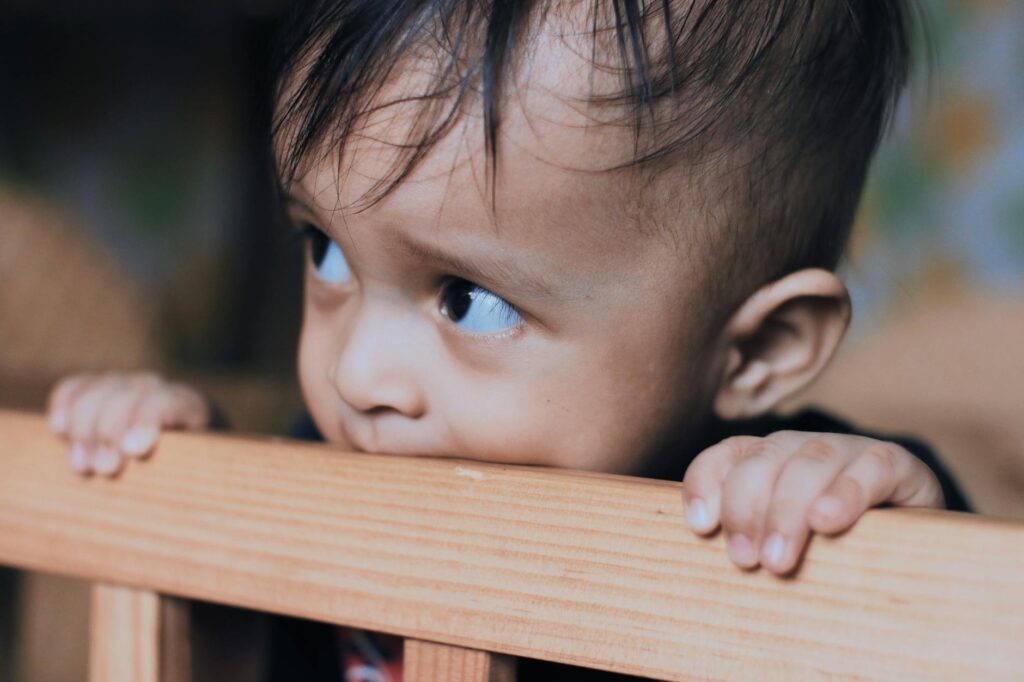
Most parents assume hitting and biting mean a toddler is being defiant. Usually, it means the opposite: they’re overwhelmed and don’t have the self-control to stop themselves fast enough. Toddler brains are still building the wiring for impulse control, emotional regulation, and language, which is why the same child can be sweet one minute and bite a playmate the next.
The American Academy of Pediatrics has long noted that biting is common in toddlers because they’re still learning to manage big feelings and social frustration, especially between 1 and 3 years old. You can read more about developmental behavior patterns through the American Academy of Pediatrics’ parenting resources.
Here’s the part that surprises a lot of parents: toddler aggression often spikes not because a child is “mean,” but because they’re stuck in a tiny emotional traffic jam. They want a toy. They’re tired. Another child got too close. Their body reacts before their brain catches up.
That means the goal is not to “teach a lesson” in the moment. The goal is to interrupt the behavior safely, teach the replacement skill, and prevent the next hit or bite before it starts.
And once you understand that, the whole problem becomes much more manageable.
The real secret to how to stop toddler hitting and biting calmly
The fastest way to reduce toddler hitting and biting is not a louder voice, a harsher consequence, or a longer lecture. It’s a calm, consistent pattern: stop the behavior, name the feeling or boundary, and show the child what to do instead. Toddlers learn best through repetition and immediate feedback, not moral speeches.
That matters because stress spreads. When we panic, raise our voice, or shame the child, we often add more chaos to an already dysregulated nervous system. A calm response doesn’t mean permissive. It means steady enough that your child can actually absorb the lesson.
Child development research has repeatedly shown that predictable, warm limit-setting supports better self-regulation over time. The CDC’s guidance on positive parenting and developmental milestones also emphasizes consistent routines and responsive caregiving as key supports for behavior. See the CDC’s developmental milestone guidance for a helpful baseline.
“Children do well if they can.” — Dr. Ross W. Greene, clinical psychologist and author of Collaborative & Proactive Solutions
That line is powerful because it changes the question. Instead of asking, “How do I punish this out of them?” you start asking, “What skill is missing right now?”
What this means in real life: you’re not trying to eliminate all big feelings. You’re teaching your toddler what to do when the feelings hit hard and fast.
Now let’s turn that into a plan you can use the next time teeth or hands come flying.
What to do right now when your toddler hits or bites
If you only remember one thing, remember this: your first job is safety, not teaching. You can teach once everyone is calm. In the moment, your response needs to be short, boring, and repeatable.
- Step 1 — Get close and block calmly: Move between children or gently hold the biting arm away. Use a neutral face and a low voice. Try: “I won’t let you hit.”
- Step 2 — Name the limit in one sentence: Keep it brief: “No biting.” “Hands are not for hitting.” Long explanations usually bounce right off in the heat of the moment.
- Step 3 — Remove the target or pause the activity: If your toddler keeps going, end the interaction for a moment. Move them away from the toy, the child, or the exciting crowd. For many toddlers, less stimulation means faster recovery.
- Step 4 — Offer the replacement skill: Show what to do instead: “Use this word: mine.” “Stomp your feet.” “Bite this teether.” Giving a replacement matters more than telling them what not to do.
- Step 5 — Reconnect after the storm: Once calm returns, keep it simple: “You were mad. Biting hurts. Next time say ‘help’.” Then move on. Don’t drag the moment out.
This is where many parents accidentally get stuck, because the next step after the bite matters just as much as the bite itself.
How to stop toddler hitting and biting calmly without shouting
The best long-term strategy is to stop treating every hit or bite as a stand-alone event. Instead, start tracking patterns. Most toddlers don’t aggress at random. They do it when they’re hungry, sleepy, overstimulated, defending a toy, teething, or trying to get a reaction.
That’s why a simple three-day behavior log can be gold. Write down: what happened right before, what the child was doing, and what the result was. You’re looking for triggers, not blame.
Researchers and clinicians often use this kind of “ABC” lens — antecedent, behavior, consequence — because it helps uncover the function of the behavior. If you want a deeper dive into behavior support, the Child Mind Institute’s guide to aggressive behavior in young children is a solid parent-friendly resource.
Use this simple prevention plan:
- Offer food before the meltdown window, not after it.
- Protect transitions with warnings: “Two more minutes, then we leave.”
- Watch for high-risk settings like crowded playdates and overstimulating stores.
- Teach one or two replacement phrases, not ten.
- Catch and praise gentle behavior immediately: “You used soft hands. Nice job.”
Here’s the quiet truth: prevention works better than correction when the child is still learning self-control. And once you spot the patterns, your house starts to feel less like a battleground.
The most useful evidence behind toddler hitting and biting
There’s a reason child behavior experts keep coming back to the same advice: toddlers need repetition, calm limits, and adult regulation. The National Association for the Education of Young Children notes that young children learn social skills through guided practice, not lectures, especially in the toddler years. Their guidance on challenging behavior aligns closely with what pediatric and early-childhood experts recommend.
We also know from developmental science that language growth and self-control develop unevenly in early childhood. A toddler may understand far more than they can say, which is why behavior often shows up before words do. This is one reason teaching phrases like “my turn,” “stop,” and “help me” can reduce frustration over time.
A surprising detail from child behavior research: punishment-heavy approaches often stop the behavior in the moment, but they don’t reliably teach the skill the child is missing. In other words, fear can suppress behavior, but it doesn’t build regulation.
If a toddler is biting because of teething discomfort, sleep deprivation, or a new stressor, fixing the environment helps more than moralizing. That’s also why pediatricians often ask about sleep, routines, and changes at home when parents bring up behavior concerns. If you’re seeing a bigger pattern, it’s worth talking with your child’s doctor, especially if the aggression is frequent, intense, or getting worse.
What This Actually Means for You
You don’t need a perfect script or a flawless temperament. You need a simple response you can repeat when your own nerves are frayed. The evidence points to the same direction again and again: calm consistency, immediate limits, and teaching the replacement behavior beat yelling every time.
That’s good news, because it means progress is possible without turning your whole day into behavior boot camp.
The toddler hitting and biting mistakes that make it worse
Some of the most common responses make total sense emotionally — and still backfire. If you’ve done any of these, you’re not alone. You’re just working with a system that needs a better plan.
- Mistake #1 — The big reaction: Yelling, gasping, or dramatic scolding can accidentally make the behavior more exciting. Toddlers remember intensity. Instead, keep your voice low and your words short.
- Mistake #2 — Overexplaining in the moment: A toddler in a full emotional surge cannot process a speech about empathy, consequences, and fairness. Save the lesson for later and stick to one clear line now.
- Mistake #3 — Inconsistent follow-through: If biting sometimes gets attention, sometimes gets a laugh, and sometimes gets a time-out, the child learns the behavior is confusing but powerful. Pick one response and use it every time.
- Mistake #4 — Only punishing, never teaching: Taking away a toy may stop the moment, but it doesn’t show the child what to do next. Always pair the limit with a replacement skill.
One more thing people rarely say out loud: if you’re already exhausted, your child will often feel that too. Your steadiness matters, but so does your support system, which is why the next part matters more than most parents expect.
Why toddler aggressive behavior is getting more attention now
Parents are paying more attention to toddler aggressive behavior partly because modern family life is more overstimulating than ever. Busy schedules, less predictable sleep, more screen exposure in many homes, and less unstructured play can all make regulation harder for little kids. The broader cultural shift matters because toddlers do best with rhythm, repetition, and boring predictability.
Experts in early childhood are also talking more about co-regulation — the idea that a child’s nervous system borrows calm from the adult first. That’s a major shift from the old “just let them cry it out or teach them a lesson” mindset. The new focus is on helping children build regulation skills with an adult’s support, not expecting them to magically arrive with those skills fully formed.
The big reason you should care now is simple: early support shapes later behavior. The habits you build around hitting and biting don’t just reduce chaos this week. They help your child learn what to do with frustration for years to come.
If the behavior feels extreme, persistent, or paired with other developmental concerns, bring it up with your pediatrician. The earlier you ask, the easier it is to sort out whether this is typical toddler development or something that needs extra support.
Questions parents ask about how to stop toddler hitting and biting calmly
Why does my toddler hit me and not other people?
Many toddlers hit the safest person in the room because they know you’ll stay close. That doesn’t make it okay, but it can mean your child feels secure enough to let the big feelings out with you. Keep the boundary firm and the tone calm, then look for the trigger.
Is biting a sign of autism or a behavior disorder?
Not by itself. Biting is common in typical toddler development, especially when language and impulse control are still immature. If you’re also noticing communication delays, social differences, or other concerns, bring them up with your pediatrician for a fuller picture.
Should I use a timeout for hitting and biting?
A short, calm pause can help some children, but it works best when it’s immediate, brief, and paired with teaching. The key is not the label — it’s whether your child understands what happened and what to do instead next time. If you’re unsure, check with your pediatrician or a child behavior specialist about what fits your child best.
How long does it take for toddler biting to stop?
For many families, it improves as language, sleep, and impulse control improve, but the timeline varies a lot. Consistent responses and prevention strategies usually make a difference before the behavior disappears completely. If it’s frequent or escalating, ask your pediatrician for help sooner rather than later.
How to stop toddler hitting and biting calmly starts with one repeatable plan
How to stop toddler hitting and biting calmly is not about becoming a perfect parent or delivering the exact right phrase every time. It’s about staying steady enough to protect, teach, and repeat the same simple response until your toddler’s brain catches up. The real win is not a magically obedient child — it’s a child who slowly learns that feelings are allowed, but hurting people is not.
If you take one thing from this, make it this: pick one calm phrase, one replacement skill, and one prevention habit, then use them consistently for the next seven days. That’s enough to start changing the pattern.
Your next step is simple: write down your child’s most common trigger today, and decide what you’ll say the very next time the hands or teeth come out.
You’ve got this, even on the messy days.