
Sibling rivalry: why siblings fight and how to stop it is one of those parenting questions that feels small until it’s happening in your kitchen, car, or living room for the fifth time before noon. One minute they’re building a blanket fort together, and the next they’re yelling over a blue marker like it’s a custody battle.
If you’ve been trying to figure out whether this is “normal,” what’s making it worse, and how to get some peace without becoming the household referee, you’re in the right place. By the end of this, you’ll know what’s actually driving the conflict and what to do about it — starting today.
Important: The information in this article is for educational purposes only and does not constitute medical advice. Every child and family is different. Always speak with your pediatrician or a qualified medical professional before making any health-related decisions.
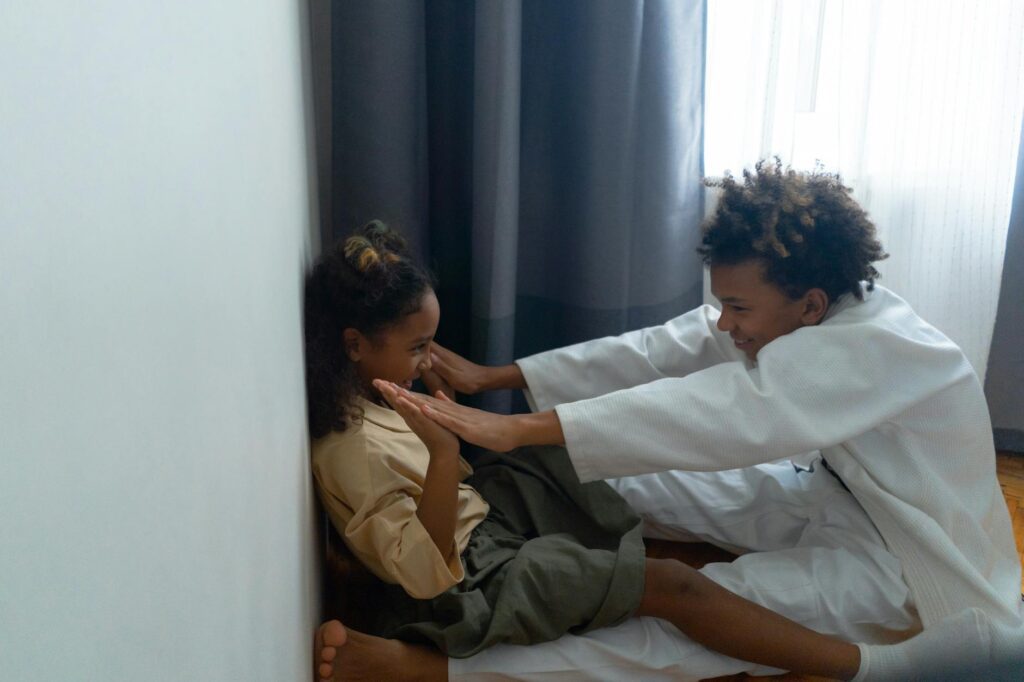
Table of Contents
Why siblings fight so much at home, even when they love each other
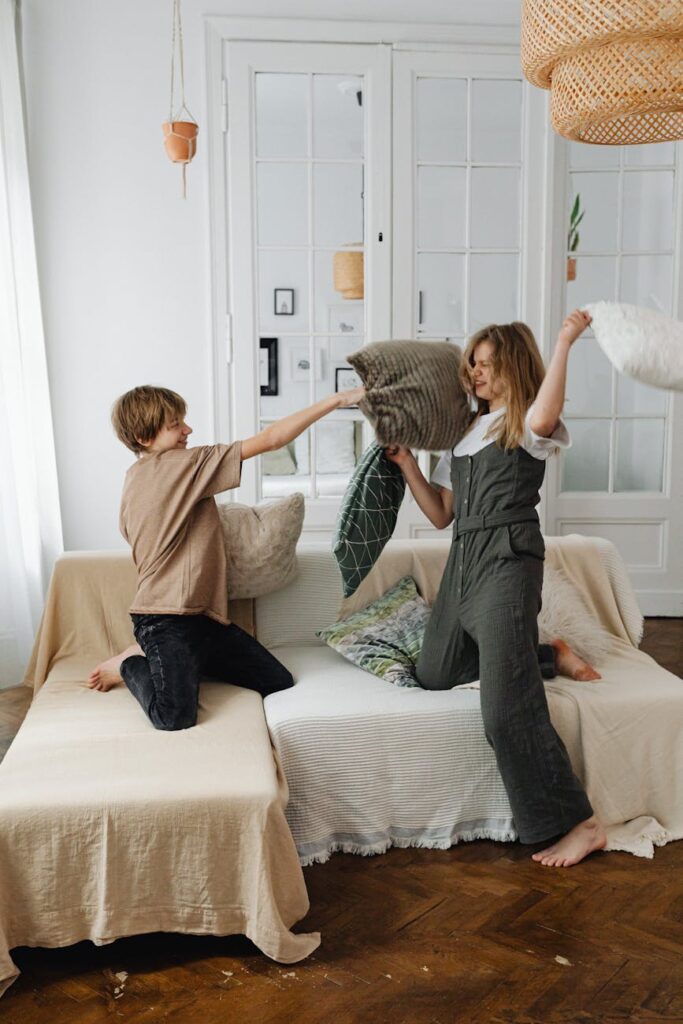
Most sibling fights are not really about the toy, the seat, or who touched whose stuff. They’re usually about something deeper: attention, fairness, control, tiredness, or a child’s very normal need to protect their territory. In other words, the argument you hear is usually the last 10 seconds of a much bigger emotional story.
That’s why sibling rivalry often spikes during predictable pressure points: before dinner, during transitions, when one child is hungry, or when a parent is distracted. The American Academy of Pediatrics notes that conflict between siblings is common and often intensifies when kids are stressed, tired, or competing for parental attention, which lines up with what families see every day (healthychildren.org).
And here’s the part many parents don’t expect: age spacing matters, but not in a simple “close in age = bad” way. Research on sibling relationships shows that rivalry tends to be strongest when children are close enough to compete for similar privileges but different enough in development that they don’t naturally play the same way for long. That mismatch creates friction fast.
At the heart of most sibling rivalry is this: children are trying to answer, “Do I matter here?” and “Will I lose if I don’t fight for my place?” Once you see that, the behavior stops looking random. And that changes everything about how you respond.
That deeper truth is the key to stopping the cycle, so let’s get specific about what’s really going on under the shouting.
The real reason sibling rivalry keeps coming back
The most important thing to understand about sibling rivalry: it is usually maintained by patterns, not personalities. Yes, some kids are naturally louder, more intense, or more reactive. But the repeat cycle usually comes from the same three forces showing up over and over — scarcity, comparison, and inconsistent adult intervention.
Scarcity means kids believe there is not enough: enough attention, enough “turns,” enough power, enough fairness. A child who feels squeezed will fight harder. That’s not manipulation. It’s survival logic in child-sized form.
Comparison makes everything sharper. When one child hears “Why can’t you be more like your brother?” or sees a sibling get praised for the exact thing they struggle with, rivalry gets a booster shot. Decades of research on family dynamics show that differential treatment — even when unintentional — predicts more conflict and lower sibling warmth.
Inconsistent adult response is the hidden fuel. If one day you jump in immediately and the next day you ignore it, kids learn that fighting is unpredictable but effective. They keep trying because sometimes it works.
Micro-example: If your 6-year-old grabs a tablet and your 4-year-old shrieks, “That’s mine!” and you always ask, “Who had it first?” you may be training them to treat every disagreement like a courtroom case. The issue isn’t just the tablet — it’s the idea that winning comes from making the loudest argument.
Another key point: kids often fight most when a parent is about to divide attention, like at bedtime or during school pick-up. That’s why sibling fighting solutions work better when they focus on the routine, not just the moment.
And one more thing parents miss: children do not experience “fair” the way adults do. Fair means “I got what I wanted right now.” That’s why a calm, consistent system beats a perfect explanation every time.
“When children are feeling most out of control, they need adults to be the calm in the room.” — Dr. Laura Markham, child psychologist and author
Once you understand that pattern, the next step is less about refereeing and more about redesigning the conflict before it starts.
How to deal with sibling rivalry without becoming the referee
If you want fewer battles, you need a plan that changes behavior in the moment and changes the family system over time. The goal is not to eliminate every disagreement. The goal is to stop every disagreement from turning into a full-body wrestling match.
- Step 1 — Name the pattern out loud: Say, “I’m seeing a pattern where this gets worse when everyone’s hungry or rushing.” Kids respond better when the problem is framed as a family habit, not one child’s flaw.
- Step 2 — Set one non-negotiable house rule: Keep it simple: “No hurting, no grabbing, no insulting.” The fewer rules you have to enforce, the more likely they’ll stick.
- Step 3 — Separate first, solve second: If voices are rising, physically break the loop. Move each child to a different space for 5 to 10 minutes so their nervous systems can settle before anyone talks.
- Step 4 — Use a turn-taking tool: For hot items like tablets, games, or the front seat, use a timer or visible schedule. When the rule is external, you become less of the enemy.
- Step 5 — Catch the good in public: Praise tiny cooperation immediately: “You handed that over the first time I asked — that was thoughtful.” Kids repeat what gets noticed.
For younger children, the AAP recommends consistent structure and immediate, calm intervention rather than lengthy lectures. That lines up with what behavior experts see repeatedly: children learn most from what happens next, not from what you say during the blow-up (AAP guidance on sibling rivalry).
If you want a practical shortcut, try this sentence the next time a fight starts: “I won’t let you hurt each other. I’m moving us to reset.” It’s short, firm, and much more effective than narrating every injustice in the room.
These steps work best when you also understand what the evidence says about sibling conflict, because that’s where the confidence comes from.
What the research says about sibling rivalry and family conflict
Sibling conflict is not just a “kids being kids” issue. Long-term studies have shown that chronic hostility between siblings is linked with more emotional and behavioral problems later on, especially when the conflict is intense, repeated, or paired with poor parental mediation. One widely cited body of work from researchers such as Judy Dunn and Jill Suitor found that the quality of sibling relationships can shape adjustment well beyond childhood.
There’s also a meaningful distinction between rivalry and aggression. Mild competition, teasing, and bickering are common. Repeated name-calling, intimidation, hitting, or one child consistently dominating the other is different. That’s when the relationship starts moving from normal friction into something that needs closer adult management.
The CDC’s developmental guidance on children’s social-emotional growth makes an important point that applies here: kids build regulation skills through repeated practice with adults helping them co-regulate first (CDC child development resources). In plain English, children don’t magically become peaceful siblings. They learn calm from being repeatedly guided back to calm.
What’s especially interesting is that research on family systems suggests the parent response is often more predictive of whether conflict escalates than the original spark. In other words, the same argument can end in tears in one house and end in recovery in another, depending on the adult script.
What this actually means for you
You do not need a perfect home or perfectly matched kids to reduce sibling rivalry. You need a repeatable response that’s calm, boring, and consistent. That’s good news, because consistency is a skill you can build — and it works better than trying to out-argue a 7-year-old at 7:42 a.m.
Once you know the science, the next move is avoiding the traps that keep families stuck in the same loop.
The sibling rivalry mistakes that make everything worse
Some well-meaning parenting moves accidentally pour gasoline on sibling fighting. If you’ve done any of these, you’re not a bad parent — you’re human. But these are worth changing fast.
- Mistake #1 — The Courtroom Trap: Asking “Who started it?” in the middle of a blow-up often turns you into the judge instead of the guide. What to do instead: separate the kids first, then address the pattern later.
- Mistake #2 — The Comparison Habit: “Why can’t you be more like your sister?” sounds motivating to adults and devastating to kids. What to do instead: praise each child for their own specific strengths.
- Mistake #3 — The Unequal Rules Problem: Letting one child break the rules because they’re younger, tired, or “more sensitive” can breed resentment fast. What to do instead: keep the core rules the same and adjust only the support.
- Mistake #4 — The Over-Explanation Spiral: Long lectures during conflict don’t work because the child’s brain is already in fight mode. What to do instead: use a short phrase, a clear limit, and a reset.
There’s another sneaky mistake worth naming: assuming your older child should always “know better.” Yes, older kids can be more self-aware, but they’re still kids. When adults offload all emotional regulation onto the oldest child, resentment grows and sibling rivalry often gets worse, not better.
The fix is not softness without boundaries. It’s firmness without favoritism. And that distinction matters more than most families realize.
That brings us to the bigger shift happening around sibling relationships right now.
Why sibling rivalry matters more in 2026 than it did before
Families today are under more pressure than ever: packed schedules, less unstructured play, more screen competition, and parents who are often stretched so thin they’re managing conflict while answering a work message. That combination makes sibling rivalry more visible, more frequent, and sometimes more intense.
Child development experts are also paying closer attention to how stress affects the whole household system. The American Academy of Pediatrics’ family guidance increasingly emphasizes predictable routines, emotional coaching, and reducing chronic stressors because they shape how children behave with one another as much as they shape sleep or school readiness.
Here’s the forward-looking truth: as children spend more time in high-stimulation environments and less time practicing free-form cooperation, sibling skills become even more important. Sharing, negotiating, repairing, waiting, and compromise are not “nice extras.” They’re life skills.
Why you should care now: the way siblings learn to handle conflict at home often becomes the template they use in friendships, classrooms, sports teams, and later romantic relationships. The home is practice space. What happens there echoes.
So the work you do now is bigger than stopping the noise. You’re shaping how your kids handle disagreement for years to come.
Sibling rivalry FAQ: what parents actually want to know
Is sibling rivalry normal?
Yes — some level of rivalry is normal in most families. Kids are learning to share attention, space, and power, which is hard. What matters is whether the conflict stays occasional and repairable, or becomes constant, aggressive, or emotionally damaging.
When should I worry about sibling fighting?
Worry more if there is frequent physical aggression, one child is being systematically bullied, or the fighting is affecting sleep, school, or mood. If the conflict feels intense or you’re unsure what’s typical for your family, talk with your pediatrician or a child mental health professional for guidance.
Should I treat my kids exactly the same to avoid jealousy?
Not exactly. Kids often need different support because they’re different ages, temperaments, and developmental stages. The goal is fairness, not sameness — and fairness means each child gets what they need, not necessarily the same thing at the same moment.
Does birth order really affect sibling rivalry?
It can influence the flavor of conflict, but it doesn’t control the outcome. Older kids may feel displaced, younger kids may feel overlooked, and middle children may feel stuck in between. But family dynamics, stress, and parent response usually matter more than birth order alone.
Can sibling rivalry be prevented completely?
No, and honestly, that’s not the goal. Healthy siblings disagree sometimes. The real win is teaching them how to fight less, recover faster, and treat each other with more respect over time.
Sibling rivalry: why siblings fight and how to stop it for real
Sibling rivalry: why siblings fight and how to stop it comes down to this: children fight hardest when they feel crowded, compared, or unsure of their place. The solution is not perfect fairness, endless talking, or trying to eliminate every disagreement. It’s clear limits, predictable routines, less comparison, and a calm adult who changes the pattern instead of feeding it.
If you’ve been exhausted by the same fight on repeat, take heart — that does not mean your kids are doomed to hate each other. It means the system needs adjusting. Start with one change today: pick the one fight that happens most often in your home, and create a simple rule for it that everyone can see and hear.
You don’t need to fix sibling rivalry overnight. You just need to stop rewarding the chaos and start rehearsing the calm.
You’ve got this, even on the messy days.
Explore more parenting resources on AmyandRose.