
Fever in children: when to worry and when to wait is one of those parenting questions that can turn a calm evening into a Google spiral fast. Your child feels hot, your phone says 102.4°F, and suddenly every tiny symptom looks louder than it is.
If you’ve ever sat beside a sleeping kid wondering whether to give medicine, call the pediatrician, or just watch and wait, you’re in the right place. By the end of this, you’ll know exactly what matters, what doesn’t, and what to do next.
Important: The information in this article is for educational purposes only and does not constitute medical advice. Every child and family is different. Always speak with your pediatrician or a qualified medical professional before making any health-related decisions.
Table of Contents
Why fever in children looks scarier than it often is
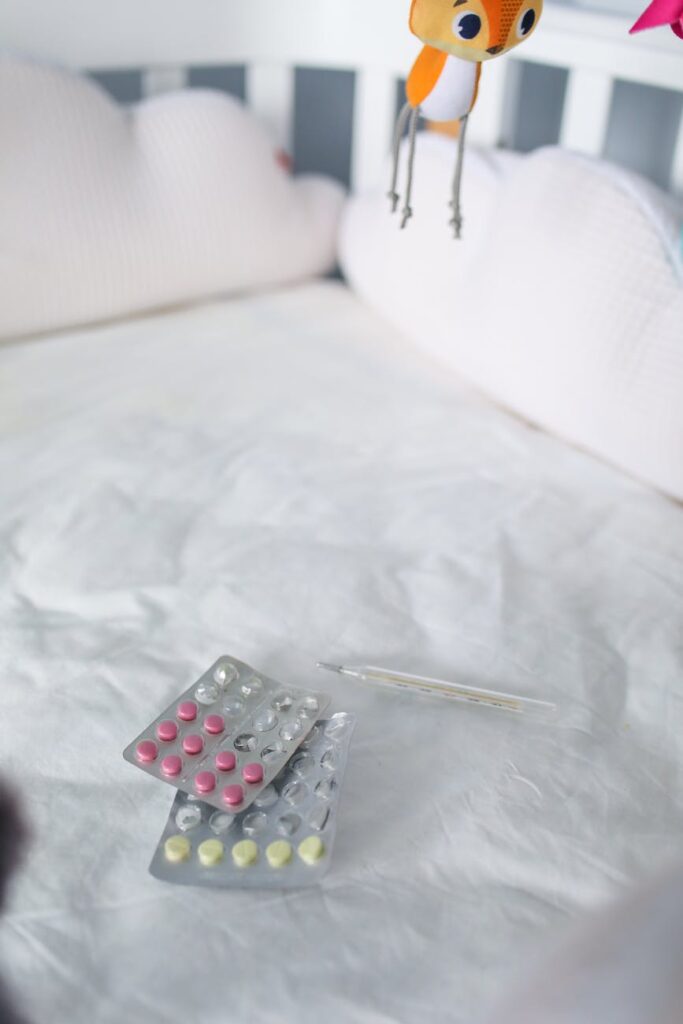
A fever can feel dramatic because it changes the whole mood of the house. One minute your child is running around; the next they’re flushed, clingy, and refusing dinner like it’s a personal insult.
Here’s the part that surprises a lot of parents: the number on the thermometer is not the whole story. Pediatricians care far more about how your child looks and acts than the exact temperature alone. A child with 103°F who is drinking, responding normally, and breathing comfortably is usually less concerning than a child with 100.8°F who is hard to wake, struggling to breathe, or showing signs of dehydration.
That’s why fever in children when to worry is less about panic and more about pattern recognition. Fever is often the body’s normal response to infection, and a temperature by itself rarely tells you whether something is serious. The real question is: is your child sick in a way that needs medical attention?
According to the American Academy of Pediatrics, fever is a common symptom and not usually dangerous on its own. What matters is the age of the child, the symptoms around the fever, and whether your child is improving, stable, or getting worse.
This matters because once you know what fever is actually telling you, the next steps become a lot less emotional and a lot more practical.
The real rule for fever in children: when to worry is about symptoms, not just the number
The biggest mistake parents make is treating the temperature like a verdict. It isn’t. A fever is a signal, not a diagnosis.
Most fevers in children are caused by viral infections and get better with time, fluids, and rest. The child’s age changes the picture, though, especially in babies. For infants under 3 months old, any fever of 100.4°F (38°C) or higher needs prompt medical evaluation, which is why baby fever guidelines are so much stricter than guidelines for older children. The CDC and pediatric organizations emphasize this because very young babies can look deceptively well while still having a serious infection.
For older babies and children, the “worry” list is mostly about behavior and breathing. A child who is floppy, confused, breathing fast, refusing fluids, or not peeing much needs attention regardless of the thermometer reading. A child who is smiling, making eye contact, and improving after rest or fluids is usually following the more reassuring path.
Here are the four details that matter most:
- Age: Babies under 3 months with a fever need prompt evaluation.
- Breathing: Fast, labored, noisy, or wheezy breathing is a red flag.
- Hydration: Fewer wet diapers, dark urine, dry mouth, or no tears matter more than the number alone.
- Behavior: Unusual sleepiness, confusion, severe irritability, or limpness are warning signs.
The insight that changes everything is this: fever is usually your child’s body working, not failing. Your job is to watch for the signs that the body is struggling, not to chase a perfect temperature number.
Now let’s turn that into a simple plan you can actually use tonight.
What to do tonight for child fever treatment at home
When parents ask about child fever treatment at home, they usually want two things: relief and clarity. You do not need to “break” the fever in order to help your child feel better. You need to keep them comfortable, hydrated, and closely observed.
- Check the thermometer correctly: Use a reliable digital thermometer and follow the directions for your child’s age. Rectal readings are the most accurate for young infants, while older children can usually use oral, axillary, or ear methods depending on what your pediatrician recommends.
- Focus on fluids: Offer small, frequent sips of water, breast milk, formula, or an age-appropriate electrolyte drink if your pediatrician has advised one. Don’t wait for your child to ask; fever often blunts thirst.
- Dress lightly: Use one layer that feels comfortable. Skip heavy blankets and don’t bundle a child to “sweat out” the fever.
- Let rest lead: A child with fever may want to sleep more. That’s fine if they’re waking enough to drink and respond normally.
- Use medicine only for comfort: Fever reducers are generally used to help a child feel better, not to normalize the number. If you’re unsure which medicine is appropriate, or whether your child can take one, ask your pediatrician or pharmacist first.
What not to do is just as important. Don’t use ice baths, alcohol rubs, or aggressive cooling. Those can make a child miserable without treating the cause. The goal is comfort and monitoring, not force.
If your child is older and looking miserable but otherwise stable, home care is often reasonable. If they’re young, fragile, or you’re getting a bad feeling you can’t shake, it’s smart to ask for help early.
How high is too high fever child parents should take seriously?
Let’s answer the question parents ask out loud: how high is too high fever child? The honest answer is that the number matters less than the age and symptoms, but there are practical thresholds.
For babies under 3 months, 100.4°F (38°C) or higher is too high and should be evaluated promptly. For older babies and children, temperatures around 102°F to 104°F can happen with common infections and are not automatically dangerous. Very high fevers, especially if they persist or come with concerning symptoms, deserve a call to your pediatrician.
What makes a fever more concerning:
- It lasts more than 2–3 days without a clear improvement trend.
- Your child is difficult to wake, confused, or unusually weak.
- They have trouble breathing, chest retractions, or blue lips.
- They show signs of dehydration like very dry mouth or very few wet diapers.
- They have a stiff neck, severe headache, a seizure, or a spreading rash.
One important nuance: a child can look very uncomfortable with a moderate fever and still be okay, while another child with a lower fever can be much sicker. That’s why pediatric guidance from sources like the NHS fever guidance for children focuses on the whole picture, not one magic temperature.
So yes, the number matters. But it matters as part of the story, not as the whole plot.
Fever in children when to call doctor for child fever without second-guessing yourself
There are times to wait and watch, and there are times to call. If you’re stuck, use this as your decision guide.
Call your child’s doctor promptly if:
- Your baby is under 3 months old and has a fever of 100.4°F (38°C) or higher.
- Your child has fever plus trouble breathing, severe vomiting, signs of dehydration, or unusual drowsiness.
- The fever lasts more than 3 days, or keeps returning.
- Your child has an underlying medical condition, a weakened immune system, or you were told to call for fever because of a specific health history.
- You’re worried because your child is not acting like themselves, even if the temperature is not very high.
Seek urgent care or emergency help now if your child is hard to wake, has a seizure, has purple or non-blanching spots on the skin, has severe breathing trouble, or looks seriously unwell. If you feel like something is very wrong, trust that instinct and get help.
The reason doctors take these signs seriously is backed by evidence. Fever itself is common, but symptoms like poor responsiveness, dehydration, and breathing distress are much better clues to serious illness than the exact temperature. The AAP’s HealthyChildren.org offers parent-friendly guidance on fever warning signs and age-based concerns.
That kind of clarity is what lets you move from fear to action.
The biggest mistakes parents make with fever
Most fever mistakes come from love, fear, and too much internet noise. The fix is not to become a perfect parent. It’s to stop doing the few things that make fever management harder than it needs to be.
- Mistake #1 — Chasing the exact number: Parents often treat a normal-looking child because the thermometer is “too high.” What to do instead: treat the child, not the chart. Comfort, hydration, and behavior matter more than getting the number to 98.6.
- Mistake #2 — Overbundling to force sweating: Heavy pajamas and blankets can trap heat and make kids miserable. What to do instead: keep clothing light and the room comfortable.
- Mistake #3 — Worrying only about the fever medicine: Medicine may help comfort, but it doesn’t replace fluids or monitoring. What to do instead: watch drinking, breathing, alertness, and wet diapers.
- Mistake #4 — Waiting too long for babies: Some parents assume all fevers are equal and wait it out. What to do instead: remember that baby fever guidelines are stricter, especially under 3 months.
One more thing people rarely say out loud: fever can make kids look worse than they are at one moment and much better an hour later. That swing is normal. The trend matters more than any single snapshot.
If you avoid these common traps, you’ll make smarter decisions and feel a lot less helpless.
Why fever guidance is becoming more parent-friendly
There’s a bigger shift happening in pediatric care: doctors are moving away from number obsession and toward symptom-based guidance. That’s a good thing. Parents don’t need more fear; they need better filters.
Research and clinical practice increasingly emphasize that fever is a normal immune response and that aggressively treating the temperature itself doesn’t improve outcomes in most routine illnesses. The bigger focus is on comfort, hydration, and identifying the small percentage of cases that need medical evaluation. As telehealth and parent education improve, more families are learning to look for red flags instead of reacting to every degree change.
That matters now because parents are bombarded by contradictory advice from family, friends, and search results. The best future-facing skill you can build is simple: know which signs are urgent, and stop giving the thermometer more power than it deserves.
If you want one expert-backed place to keep learning, the CDC’s fever and symptom guidance and your pediatrician’s office policies are the safest anchors to trust.
And if you’ve ever felt like everyone else got the fever manual except you, this is the part where the fog lifts a little.
Fever in children when to worry: the questions parents ask most
What temperature is a fever in a child?
A fever is generally considered 100.4°F (38°C) or higher, though the exact cutoff can depend on how and where you take the temperature. For young babies, especially under 3 months, that number needs prompt medical attention. If you’re unsure about the method, ask your pediatrician which thermometer is best for your child.
Should I wake my child up to give fever medicine?
Usually, no — not unless your pediatrician has told you to or your child is uncomfortable and needs care. Sleep is often part of recovery, and the bigger question is whether your child is breathing normally and waking enough to drink when needed. If you’re worried, call your doctor for guidance.
When should I worry about a fever with no other symptoms?
If your child is older and otherwise acting fairly normal, a fever without other symptoms is often monitored at home for a day or two. But if the fever lasts, your child looks worse, or you notice dehydration, breathing changes, or unusual sleepiness, call the doctor. For babies, the threshold for concern is much lower.
Can teething cause a real fever?
Teething may cause mild temperature changes and fussiness, but it does not usually cause a true fever. If your baby has a rectal temperature of 100.4°F or higher, don’t assume it’s just teething. Check with your pediatrician, especially if your baby is very young.
When is a fever an emergency?
A fever becomes an emergency if your child has trouble breathing, a seizure, confusion, severe dehydration, a stiff neck, or a rash that doesn’t fade when pressed. If your child is under 3 months and has a fever, that also needs urgent medical attention. When in doubt, call for help sooner rather than later.
Fever in children: when to worry and when to wait
The heart of fever in children: when to worry and when to wait is simple once you strip away the panic. Most fevers are the body doing its job, and most kids do best with fluids, rest, and watchful care. The real warning signs are age, behavior, breathing, and hydration — not the number alone.
If you remember only one thing, make it this: a fever is information, not a diagnosis. You don’t need to memorize every temperature rule tonight. You just need to know when your child is uncomfortable, when they’re getting better, and when something feels off enough to call the doctor.
Take one minute right now to check your child’s age, temperature method, and current symptoms, then decide whether you’re in the watch, call, or seek-care-now category.
You’ve got this, and you don’t have to guess alone.