
Weighted blankets are sometimes used as a comfort or sensory aid for older children, but they do not treat or cure autism. In a randomized trial in autistic children, weighted blankets did not improve measured sleep outcomes compared with an ordinary blanket, although some children and parents preferred them. Suitability needs individual assessment; they must not be used for infants.
Related resource: The Pros and Cons of a Weighted Blanket.

Table of Contents
How do these weighted blankets work?
The process is simple: pockets filled with glass beads are sewn inside the blanket, making it evenly heavy. The amount of glass beads determines the weight of the blanket. Everything sits nicely in a cover so soft even adults will want to snug under it. Take care when washing: you can only wash the removable cover; otherwise, the beads might move inside their pockets.
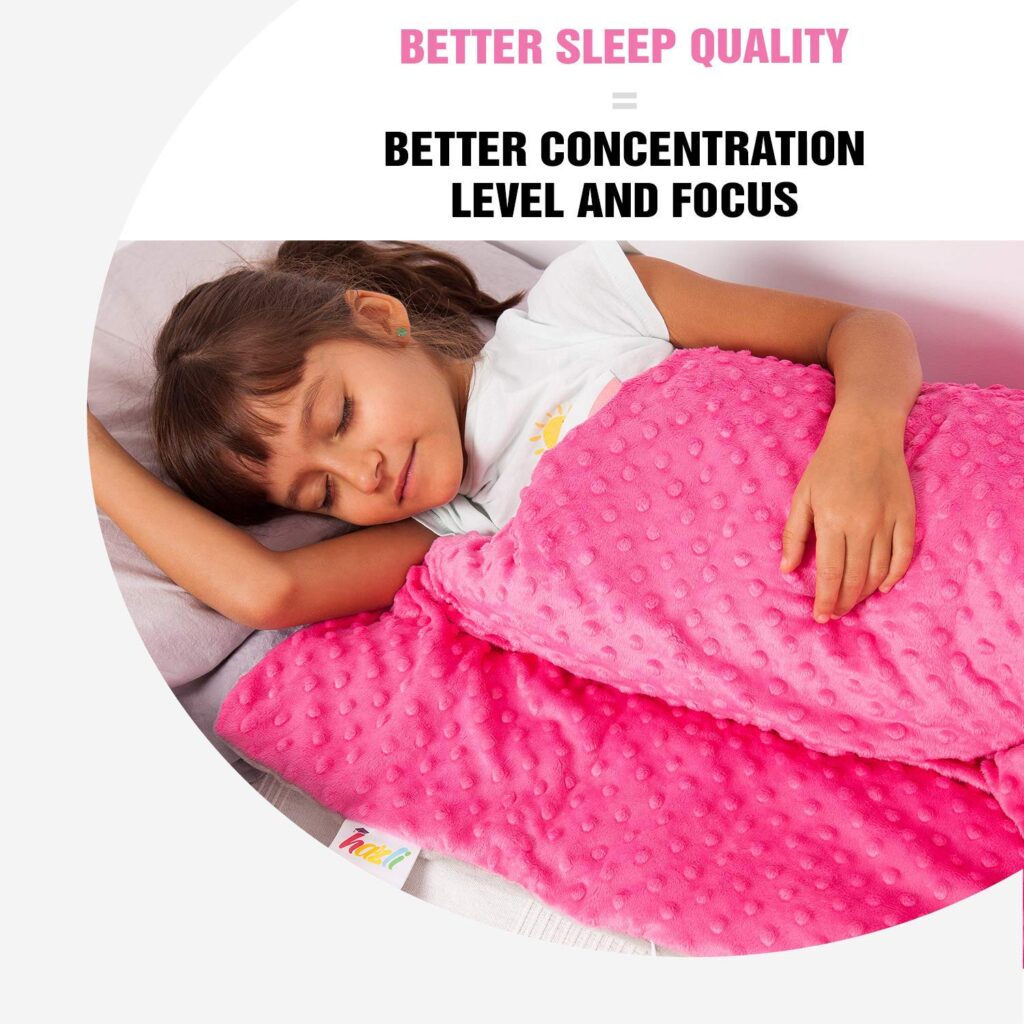
Choosing the right size and weight of the blanket is key because your child should feel like their body is being completely embraced and should provide a calming and relaxed sensation.
Find weighted blankets for kids in different colors and sizes.
Are the weighted blankets ideal for kids with autism?

Some families report that an older child likes the sensation of a weighted blanket. That preference is not evidence that it regulates serotonin, reduces autistic traits or reliably improves sleep, attention or anxiety. Discuss a specific sensory or sleep concern with an appropriate clinician or occupational therapist.
Sleep outcomes and evidence limits
A weighted blanket has not been shown to reliably regulate serotonin or treat anxiety. Persistent sleep or anxiety concerns need an appropriate assessment; a child’s preference for a blanket does not establish a health benefit.
Individual sensory preferences
A child’s preference for a weighted blanket does not establish better school performance, improved social behaviour or fewer meltdowns. Discuss sensory needs with an appropriate clinician or occupational therapist.
Weighted blanket with pink cover on Amazon.
Conclusions
Do not choose a weighted blanket by trial and error or treat “10% of body weight” as a universal safety rule. An older child’s ability to move the blanket, health conditions and the exact product instructions matter. Ask the child’s clinician or occupational therapist whether one is appropriate and how it may be used safely.
Anecdotal preferences do not establish a success rate or prove a sleep benefit. Weighted blankets have limitations and potential risks, particularly if a child cannot remove one independently. Do not use them as a restraint or substitute them for assessment of persistent sleep difficulties.